Featured Sections
-
1.1 Strong Earthquakes and Geomorphic Processes in Intracontinental Orogenic BeltsConveners: Zhikun Ren, Xuhua Shi, Xiaoping Yuan, Chuanyong Wu, Gang Rao
Strong earthquakes are a key component of orogenesis, and the links between large earthquakes and geomorphic processes in intracontinental orogenic belts represent a research frontier in Earth science. Earthquake rupture can generate coseismic uplift, contributing to mountain growth. At the same time, earthquake-induced hazards such as landslides can substantially reshape the Earth’s surface and accelerate erosion and sediment transport. Over longer timescales, the interaction between strong earthquake cycles and surface erosion jointly shapes the landscapes of orogenic belts and is central to understanding the evolution of coupled tectonic–climatic systems.
This session aims to explore how strong earthquakes drive mountain uplift and geomorphic evolution in orogenic belts. By integrating active tectonics, paleoseismology, high-resolution topographic measurements, such as InSAR and LiDAR, and numerical modeling, the session seeks to reveal the dynamic processes of the coupled “earthquake–erosion–uplift” system. We welcome recent advances in detailed quantitative studies of active tectonics and tectonic geomorphic evolution.Session Convener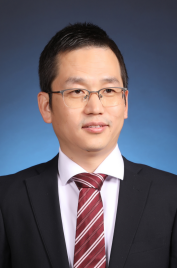 Zhikun RenProfessor Deputy Director of Key Laboratory of Seismic & Volcanic Hazards, CEA Director of Division of Seismotectonics & Seismic Hazard Analyses Institute of Geology, China Earthquake Administration Yard No.1 Jia, Huayanli, Chaoyang District, Beijing, China, 100029
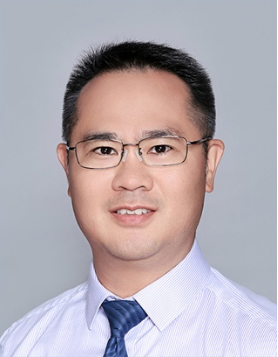 Xuhua ShiXuhua Shi is a tenured ZJU100 professor at Zhejiang University, and a recipient of the National High-Level Young Talent Program. He received his Ph.D. from The Pennsylvania State University and conducted postdoctoral research at Nanyang Technological University, Singapore. His research focuses on tectonic geomorphology, active tectonics, and earthquake geology.
He currently serves as Vice Chair of the China Committee of the World Young Earth Scientists Alliance, Council Member of the Seismological Society of China, Deputy Director of its Specialized Committee on Seismogeology, and Member of the Specialized Committee on Structural Geology and Geodynamics of the Geological Society of China. He also serves as Associate Editor for three international journals, including Geomorphology, and as an editorial board member for several leading domestic and international journals, including Journal of Structural Geology, Geological Review, and Seismology and Geology.
He has led two projects funded by the National Natural Science Foundation of China and two research tasks under national key R&D and resource survey programs of the Ministry of Science and Technology. He has published 68 papers in leading domestic and international journals, including PNAS and Nature Communications, among which 28 were published as first or corresponding author. He has received the Li Shanbang Outstanding Seismological Science and Technology Paper Award.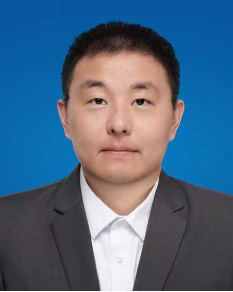 Xiaoping YuanProfessor at the School of Earth and Planetary Sciences, China University of Geosciences (Wuhan). He received his Ph.D. from Paris Sciences et Lettres (PSL) University in France and conducted postdoctoral research at the GFZ German Research Centre for Geosciences in Germany. He has long been engaged in research on tectonic geomorphology modeling and has achieved innovative results in the development of new methods for surface process simulation and coupled tectonic-climate-surface process modeling, as well as in the study of interactions among tectonics, climate, and surface processes. He has published 66 SCI-indexed papers in journals such as Nature, NC, PNAS, Geology, EPSL, GRL, and JGR, including 22 SCI papers (14 in Nature Index journals) as first or corresponding author in journals such as NC, Geology, EPSL, GRL, and JGR. He has led projects including the NSFC Overseas Outstanding Youth Fund, General Projects, a special topic of the National Science and Technology Major Project for Deep Earth, and has received support from the Hubei Provincial Hundred Talents Program and Wuhan Talents Program. He has also been invited to serve as Associate Editor for the international SCI journal Terra Nova, Youth Editorial Board Member for JES, and guest editor for special issues of journals including ESPL.
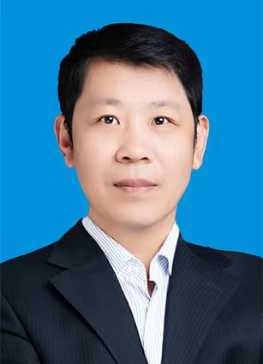 Chuanyong WuChuanyong Wu is a professor at University of Emergency Management. He is specialized in the research on active tectonics and the mechanism of strong earthquake propagation, seismic structure exploration and earthquake disaster prevention. He was selected for the Excellent Talents Program of the China Earthquake Administration. He currently serves as Committee Member of Specialized Committee on Earthquake Geology, and Specialized Committee on Tectonic Geomorphology. He has led four projects funded by the National Natural Science Foundation of China and three sub-projects under special project/resource survey programs of the Ministry of Science and Technology. He has published over 70 papers in domestic and international journals, and received six provincial and ministerial-level awards and eight department level awards.
 Gang RaoGang Rao is a Professor and Doctoral Supervisor at Southwest Petroleum University, who has been selected as an Innovation Leading Talent under Sichuan Province’s "Tianfu Emei Plan" and leads the innovation team under Chengdu’s "Rongpiao Plan". He is primarily engaged in scientific research on structural deformation analysis and modelling, active tectonics and seismic hazards, as well as tectonic geomorphology. His key research areas include the kinematic evolution process of fold-thrust belts, the three-dimensional growth of active structures and their geomorphic response mechanism, etc. To date, he has presided over more than 20 research projects, which include those supported by the National Natural Science Foundation of China, Sichuan and Zhejiang Provinces, and enterprise-commissioned research projects. He has also published more than 50 SCI academic papers, including those in journals such as Nature Communications.
 -
1.2 Active Tectonic Deformation and Strong Earthquake Rupture Behavior of the Xinjiang – Central Asian Tianshan and Adjacent AreasOrganizer:Tao Li ,An Li , Yuan Yao , Xuhua Shi, Chuanyong Wu
This theme focuses on Active Tectonic Deformation and Strong Earthquake Rupture Behavior of the Xinjiang – Central Asian Tianshan and Adjacent Areas. It includes the spatial distribution, deformation patterns and evolution of active tectonics in the Xinjiang – Central Asian Tianshan Mountains and adjacent areas, and explores the regional tectonic deformation and dynamic mechanisms. It also investigates the characteristics and laws of rupture behavior of strong earthquakes, analyzes the rupture types, rupture scales and recurrence intervals of strong earthquakes, clarifies the correlation between active tectonic deformation and the strong earthquakes occurrence, and reveals the temporal-spatial distribution laws and controlling factors of strong earthquake ruptures.Session Convener Tao LiPh.D., Professor at the Institute of Geology, China Earthquake Administration, and Deputy Director of the National Observation and Research Station of Pamir Intracontinental Subduction in Xinjiang, Ministry of Science and Technology. My research focuses on strong earthquake activity, active tectonics, and Cenozoic tectonic evolution of the Tian Shan, Pamir, and adjacent regions in Xinjiang and Central Asia. I have led or participated in a number of projects supported by the National Science and Technology Basic Resource Survey Program, the National Key R&D Program of China, and the National Natural Science Foundation of China. I have published over 70 papers in prestigious journals including CEE, GRL, JGR, and Seismology and Geology.
 An LiResearch Professor at the Institute of Geology, China Earthquake Administration. He received his PhD in Structural Geology. He is a doctoral supervisor and Deputy Director of the Active Tectonics Research Laboratory. His research mainly focuses on fundamental theoretical studies of active faults and earthquake geology, as well as applied research on earthquake-related disaster reduction. He serves as a committee member of the earthquake geology Specialized Committee of the Seismological Society of China. He has led and participated in a number of projects funded by the National Natural Science Foundation of China, the National Key R&D Program of China, and special scientific research projects of the earthquake industry. As the first author or corresponding author, he has published more than 50 papers in domestic and international journals, among which 30 were published as first or corresponding author. He has been awarded one First Prize of Provincial and Ministerial-level Scientific and Technological Achievements.
 Yuan Yaoresearch fellow, doctoral supervisor. Director of Urumqi Central Asia Earthquake Research Institute, China Earthquake Administration; Deputy Director of Xinjiang Pamir Intracontinental Subduction National Field Scientific Observation and Research Station; Deputy Director of the Science and Technology Committee of Earthquake Agency of Xinjiang Uygur Autonomous Region; Member of China Youth Federation of Scientific and Technical Workers; Vice Chairman of Seismological Society of Xinjiang; Secretary-General of the China Committee of the Fifth World Young Earth Scientists Network; Deputy Secretary-General of Youth Working Committee of Geological Society of Xinjiang; External Supervisor of China University of Geosciences (Beijing), Institute of Disaster Prevention, and Xinjiang University; Tianshan Talent Young Elite of the Autonomous Region; Young Talent of China Earthquake Administration; Core Member of Scientific and Technological Innovation Team of China Earthquake Administration; Core Member of Tianshan Talent Scientific and Technological Innovation Team of the Autonomous Region. He has presided over 15 national, provincial, ministerial, and bureau-level projects including the National Natural Science Foundation, National Key R&D Program, Autonomous Region Key R&D Program, and Autonomous Region Tianshan Talent Program. As first author or corresponding author, he has published over 30 papers and monographs in journals such as GRL, SRL, JSG, and Seismology and Geology. He has received 10 provincial, ministerial, and bureau-level awards.
Xuhua ShiXuhua Shi is a tenured ZJU100 professor at Zhejiang University, and a recipient of the National High-Level Young Talent Program. He received his Ph.D. from The Pennsylvania State University and conducted postdoctoral research at Nanyang Technological University, Singapore. His research focuses on tectonic geomorphology, active tectonics, and earthquake geology.
Yuan Yaoresearch fellow, doctoral supervisor. Director of Urumqi Central Asia Earthquake Research Institute, China Earthquake Administration; Deputy Director of Xinjiang Pamir Intracontinental Subduction National Field Scientific Observation and Research Station; Deputy Director of the Science and Technology Committee of Earthquake Agency of Xinjiang Uygur Autonomous Region; Member of China Youth Federation of Scientific and Technical Workers; Vice Chairman of Seismological Society of Xinjiang; Secretary-General of the China Committee of the Fifth World Young Earth Scientists Network; Deputy Secretary-General of Youth Working Committee of Geological Society of Xinjiang; External Supervisor of China University of Geosciences (Beijing), Institute of Disaster Prevention, and Xinjiang University; Tianshan Talent Young Elite of the Autonomous Region; Young Talent of China Earthquake Administration; Core Member of Scientific and Technological Innovation Team of China Earthquake Administration; Core Member of Tianshan Talent Scientific and Technological Innovation Team of the Autonomous Region. He has presided over 15 national, provincial, ministerial, and bureau-level projects including the National Natural Science Foundation, National Key R&D Program, Autonomous Region Key R&D Program, and Autonomous Region Tianshan Talent Program. As first author or corresponding author, he has published over 30 papers and monographs in journals such as GRL, SRL, JSG, and Seismology and Geology. He has received 10 provincial, ministerial, and bureau-level awards.
Xuhua ShiXuhua Shi is a tenured ZJU100 professor at Zhejiang University, and a recipient of the National High-Level Young Talent Program. He received his Ph.D. from The Pennsylvania State University and conducted postdoctoral research at Nanyang Technological University, Singapore. His research focuses on tectonic geomorphology, active tectonics, and earthquake geology.
He currently serves as Vice Chair of the China Committee of the World Young Earth Scientists Alliance, Council Member of the Seismological Society of China, Deputy Director of its Specialized Committee on Seismogeology, and Member of the Specialized Committee on Structural Geology and Geodynamics of the Geological Society of China. He also serves as Associate Editor for three international journals, including Geomorphology, and as an editorial board member for several leading domestic and international journals, including Journal of Structural Geology, Geological Review, and Seismology and Geology.
He has led two projects funded by the National Natural Science Foundation of China and two research tasks under national key R&D and resource survey programs of the Ministry of Science and Technology. He has published 68 papers in leading domestic and international journals, including PNAS and Nature Communications, among which 28 were published as first or corresponding author. He has received the Li Shanbang Outstanding Seismological Science and Technology Paper Award.
Chuanyong WuChuanyong Wu is a professor at University of Emergency Management. He is specialized in the research on active tectonics and the mechanism of strong earthquake propagation, seismic structure exploration and earthquake disaster prevention. He was selected for the Excellent Talents Program of the China Earthquake Administration. He currently serves as Committee Member of Specialized Committee on Earthquake Geology, and Specialized Committee on Tectonic Geomorphology. He has led four projects funded by the National Natural Science Foundation of China and three sub-projects under special project/resource survey programs of the Ministry of Science and Technology. He has published over 70 papers in domestic and international journals, and received six provincial and ministerial-level awards and eight department level awards. -
1.3 Deep Structure and Geodynamic Processes of the Tianshan OrogenOrganizer:Guohui Li , Xuewei Bao ,Jikun Feng ,Shaolin Liu , heng Zhang , Huangfu Pengpeng, Wei Li , Yajian Gao ,Li Jin
As one of the world's most active and classic intracontinental orogenic belts, the Tianshan Mountains provide a crucial window into the deep structure and geodynamic processes that govern continental lithospheric evolution, intracontinental deformation mechanisms, and the seismogenic environments of major earthquakes. This session focuses on the deep tectonic characteristics and geodynamic evolution of the Tianshan and its adjacent regions. We aim to bring together the latest interdisciplinary advancements, incorporating high-resolution geophysical imaging (e.g., seismic tomography, receiver functions, surface waves, and joint inversion of multiple geophysical datasets), geodetic observations, geochemical tracing, and cross-scale numerical modeling. Key discussions will center on the fine crust-mantle structure, 3D rheological properties, and deep material transfer patterns within the orogen. We seek to unravel the underlying deep geodynamic driving mechanisms and crust-mantle interactions, with a specific focus on how these deep processes control surface uplift, present-day stress field distribution, and seismicity. We cordially invite researchers worldwide to submit their innovative sresearch findings and recent advances. Together, we hope to advance a comprehensive understanding of the deep-shallow coupling mechanisms in the Tianshan, thereby offering robust scientific support for enriching theories of intracontinental orogeny and regional seismic hazard mitigation.Session Convener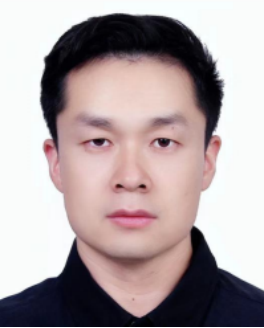 Guohui LiProfessor at the Institute of Earthquake Forecasting, China Earthquake Administration. His research interests include crust-mantle structure and earthquake source parameters. He has published over 40 academic papers, including 15 as first/corresponding author in journals such as Communications Earth & Environment, EPSL, and GRL. He has led three NSFC projects (two General, one Young Scientist), one sub-project of the National Key R&D Program for Young Scientists, one China Postdoctoral Science Foundation project, and four basic research grants from central public-interest research institutes.
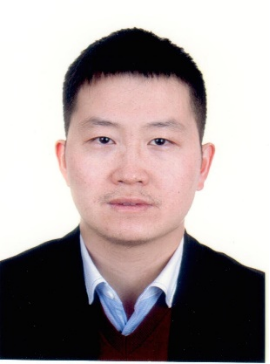 Xuewei BaoProfessor (Researcher) and Doctoral Supervisor at Zhejiang University. He has long been engaged in research on crust-mantle structure and seismic activity. He has published 46 papers, including 22 as first/corresponding author in SCI journals such as Science and Nature subjournals, with over 3,000 citations. In 2018, he was selected for the Thousand Talents Program for Young Professionals (Youth Program) by the Organization Department of the CPC Central Committee. In 2019, he received the First Prize of Natural Science Award from the Ministry of Education. He currently serves as Deputy Director of the Seismology Committee of the Seismological Society of China, and as an editorial board member for Earthquake Science and Reviews of Geophysics and Planetary Physics.
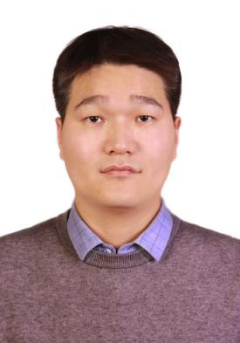 Jikun FengTenured Associate Professor and Doctoral Supervisor at the School of Earth and Space Sciences, University of Science and Technology of China. Recipient of the National Natural Science Foundation of China (NSFC) Young Scientist Fund (Category B) — formerly known as the Excellent Young Scientist Fund. His recent work has significantly advanced the application of ambient noise interferometry to deep Earth structure imaging, and he has developed innovative methods for ambient noise body wave data analysis and imaging. He has also carried out extensive interdisciplinary research involving seismology, geodesy, mineral physics, and geochemistry, yielding important findings on fine-scale lithospheric structure and tectonic evolution. He has published a total of 27 papers, including 11 as first/corresponding author, with first-author papers in high-impact journals such as National Science Review, Nature Communications, and Geophysical Research Letters. He serves as a reviewer for journals including Geology, GRL, JGR-Solid Earth, Tectonophysics, SRL, Earthquake Science (EPP), and the Chinese Journal of Geophysics.
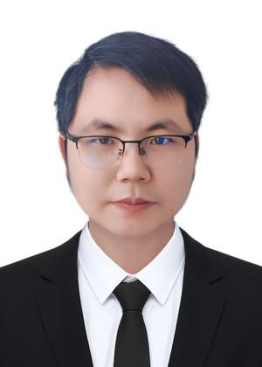 Shaolin LiuProfessor (Researcher) and Doctoral Supervisor at the University of Chinese Academy of Sciences and Southwest Petroleum University, among others. He received his Ph.D. from the Institute of Geology and Geophysics, Chinese Academy of Sciences, and conducted postdoctoral research at Tsinghua University and the Division of Mathematical Sciences at Nanyang Technological University, Singapore. In 2023, he was awarded the National High-Level Talents Special Support Program for Young Top-Notch Talents, and in 2026, he received the New Era Youth Pioneer Award. He serves as Associate Editor of Acta Seismologica Sinica, editorial board member for Earthquake Research Advances, Reviews of Geophysics and Planetary Physics, and Journal of Disaster Prevention and Reduction, and Deputy Director of the Crustal Stress and Earthquake Committee of the Seismological Society of China. He is the Chief Scientist of a Young Scientist Project of the National Key R&D Program and also the Chief Scientist of an Innovation Team at the National Institute of Natural Hazards. His research covers seismic wave propagation, imaging, software development, and equipment development. He has published 52 first/corresponding-author SCI papers in journals such as GRL, JGR-Solid Earth, Tectonophysics, GJI, Geophysics, Natural Hazards, Science China, and Chinese Journal of Geophysics. He has led 20 vertical projects including the National Key R&D Program for Young Scientists, NSFC Joint Key projects, General projects, Young Scientist projects, sub-projects of Major Programs, and provincial/ministerial-level projects.
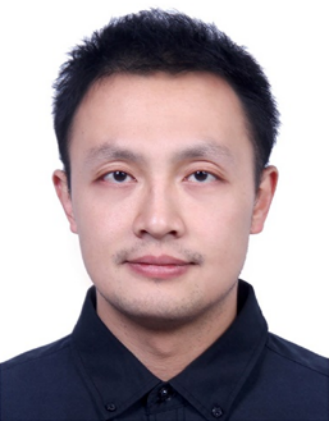 heng ZhangProfessor at the Institute of Tibetan Plateau Research, Chinese Academy of Sciences. He has long been engaged in seismology, geodynamics, and seismic instrument development. He has led multiple projects funded by the NSFC, instrument development projects of the Chinese Academy of Sciences, and National Key R&D and Strategic Priority Research Program projects. He has published numerous SCI papers and achieved systematic results in the study of shallow and deep structures of the Tibetan Plateau. Through anisotropic imaging, earthquake location, and dynamic modeling, he provides scientific evidence for deep tectonic evolution mechanisms of the plateau. Based on self-developed optical fiber hardware and software for extreme environments, he delivers high-resolution shallow subsurface detection results for major engineering construction and resource exploration, addressing national needs. He has received honors including the Zhao Jiuzhang Outstanding Young and Middle-Aged Scientist Award, the Liu Guangding Young Scientist Award for Geophysics, and the CAS Outstanding Scientific and Technological Achievement Award.
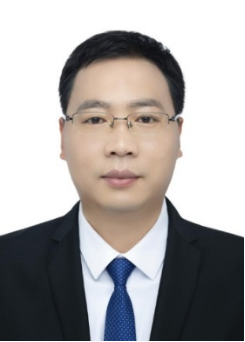 Huangfu PengpengProfessor and Doctoral Supervisor at the College of Earth and Planetary Sciences, University of Chinese Academy of Sciences. Recipient of the National Science Fund for Excellent Young Scholars. He serves as Secretary-General of the Geodynamics Committee of the Chinese Society of Theoretical and Applied Mechanics and as a member of the Committee on Numerical Earthquake Prediction, Seismological Society of China. His research focuses on continental collision dynamics, primarily using computational geodynamic numerical simulations, with an emphasis on the Himalayan–Tibetan orogenic belt. He has made innovative contributions to the understanding of crust-mantle structure evolution of the Tibetan Plateau, far-field effects of the India–Asia collision, and differential evolution of collisional orogens. He has published nearly 50 papers in domestic and international geoscience journals, including 20 as first author. He has led projects funded by the NSFC (Young Scientists, General, Excellent Young Scholars), sub-projects of the National Science and Technology Major Project, the National Key R&D Program, and the Second Tibetan Plateau Scientific Expedition. He serves on the editorial board of Acta Geologica Sinica (English Edition) and as a Review Editor and Guest Associate Editor for Frontiers in Earth Science. He received the First Prize of Science and Technology Award from the Chinese Society for Rock Mechanics and Engineering and was selected as a “Xiaomi Young Scholar” in 2023.
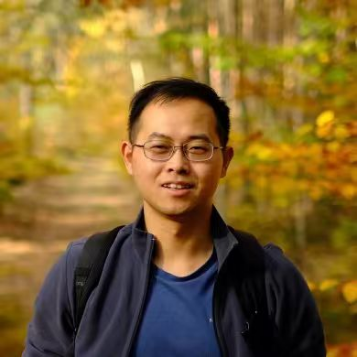 Wei LiTenure-track Professor and Doctoral Supervisor at the School of Geophysics and Geomatics, China University of Geosciences (Wuhan). His research focuses on seismic imaging of crust-mantle structure and continental dynamics of the Tibetan Plateau and its margins. He has achieved a series of advances in lithospheric delamination and modification of the plateau, intracontinental distributed deformation in the Tianshan, and mantle flow escape in southeastern Tibet. He has published 11 first/corresponding-author papers in internationally renowned geoscience journals such as Nature Communications, National Science Review, GRL, JGR, and EPSL.
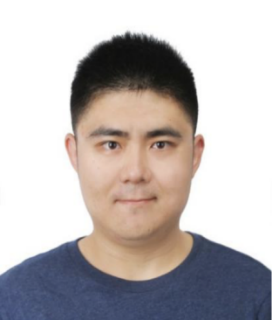 Yajian GaoReceived her Ph.D. in 2022 from the Free University of Berlin and the GFZ German Research Centre for Geosciences, with a doctoral thesis evaluated as Summa cum laude (highest distinction). She is currently a postdoctoral researcher at the Karlsruhe Institute of Technology (KIT), Germany. Her research interests include multi-scale regional seismology, teleseismic and ambient noise full-waveform inversion, and the spatiotemporal distribution of high-frequency ambient noise sources. Her study regions include the Andean subduction zone in South America, the Pamir–Tianshan orogenic belt in Central Asia, and the Adriatic plate collision/subduction zone in the Balkans. She has published multiple papers in journals such as Journal of Geophysical Research: Solid Earth, Geophysical Research Letters, Geophysical Journal International, and Communications Earth & Environment.
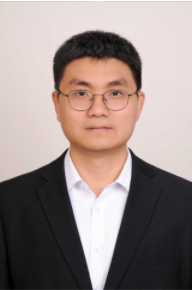 Li JinProfessorate Senior Engineer, serves as a member of the Science and Technology Committee of the Earthquake Agency of Xinjiang, a member of the National Earthquake Situation Expert Group, a member of the National Analysis and Prediction Seismology Working Group, and an editorial board member of the China Earthquake Cases series. In 2020, selected for the China Earthquake Agency's Young Talent Program. Throughout career, served as principal investigator for six provincial- and ministerial-level research projects, including programs supported by the Earthquake Science and Technology Spark Plan, the Xinjiang Uygur Autonomous Region Natural Science Foundation, and the Xinjiang Uygur Autonomous Region Key Research and Development Program. Over 20 papers published as first author in journals such as Science China Earth Sciences, Chinese Journal of geophysics, Frontiers in Earth Science, and Seismology and Geology(including 10 SCI/EI-indexed papers). Two industry standards completed. Received five first prizes and three third prizes of the Xinjiang Outstanding Achievement Award in Earthquake Prevention and Disaster Reduction.
 -
2.1 Practical Research and Frontier Studies on Major EarthquakesOrganizer:Yin Li,Jie Li,Yueren Xu ,Renwei Xiong, Yuan Yao,Yongqiang Yang, Valijon Yusupov
Major earthquakes represent an extreme manifestation of Earth's internal dynamic processes and interactions among geospheres. Seismic scientific investigations are critical for deciphering earthquake mechanisms and enhancing risk mitigation, serving as a key link between fundamental research and practical disaster resilience and increasingly becoming a vital direction for geoscience to support national public safety. On-site investigations capture first-hand data on source rupture processes, surface deformation, and disaster distribution, providing essential constraints for unraveling the complete chain from earthquake nucleation to occurrence and cascading impacts. Data on co-seismic displacement, secondary hazards, and engineering earthquake damage directly inform seismogenic structure analysis, seismic loss assessment, and performance-based seismic design optimization of buildings and structures. Integrating multi-phase investigation results with historical seismic records reveals regional strong earthquake recurrence intervals and tectonic evolution patterns, forming a core framework for understanding continental dynamics and seismic risk.This special issue aims to explore innovations and practical applications in seismic scientific investigations. By combining earthquake geological surveys, space-air-ground integrated observation networks, geophysical prospecting, and numerical modeling, we seek to elucidate the dynamical processes spanning source nucleation, crustal rupture, and cascading disaster evolution. We call for the latest research contributions in the following areas: seismic investigation techniques and methodologies, quantitative studies of surface rupture and tectonic deformation, fine-scale analysis and rapid assessment of earthquake damage, seismic risk assessment and disaster prevention/mitigation applications, earthquake early warning systems, and practices in earthquake emergency response and post-disaster reconstruction.Session Convener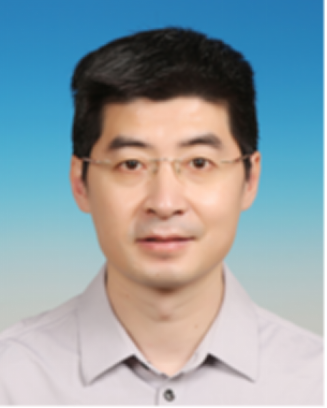 Yin LiProf. Ying Li, is a Research Professor and deputy director of the Institute of Earthquake Forecasting, China Earthquake Administration; His study interests are geochemical precursor of earthquake fluids in the active fault zones, phase transitions and Chemical processes during the metamorphism of subducted materials in subduction zone etc. He has published about 120 papers. He serves as the Chair of the Commission on the Rapid Interdisciplinary Investigation of Significant Earthquakes (RI2sE) under the International Association of Seismology and Physics of the Earth's Interior (IASPEI). He is also working as executive commissioner of the Chinese Society for Mineralogy, Petrology and Geochemistry, commissioner of the Seismological Society of China. He has been responsible for International Geoscience Programme project (IGCP-724) “Fluid Geochemistry and Earthquake Forecasting” from UNESCO and 4 projects founded by the National Nature Science Foundation of China, etc. He works as the deputy commander in Chief of large earthquake scientific expeditions in China and has directed the scientific investigation of 2021 Luxian 6.0 earthquake, 2021 Maduo 7.4 earthquake, 2024 Wushi 7.1 earthquake, etc.
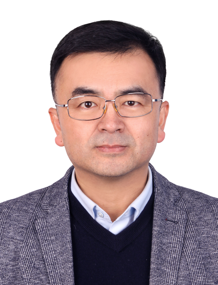 Jie Li/
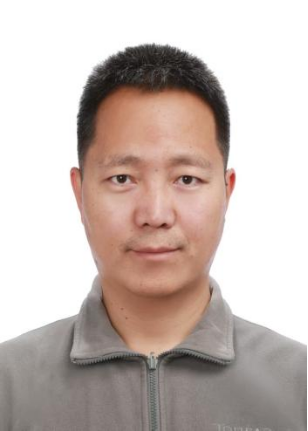 Yueren XuDr. Yueren Xu is currently a researcher professor and master's supervisor at the Institute of Earthquake Prediction, China Earthquake Administration (IEF,CEA). He was a visiting scholar at Durham University, UK in 2017. His current research focuses on quantitative analysis of Active Tectonics. He is a member of the Seismological Geology Committee of the Seismological Society of China, and an editorial board member of Journal of Earthquake Research Advances and Earthquake Research (Published in Chinese). In 2021, he received an award from the Ministry of Emergency Management for earthquake relief efforts. He has undertaken/participated in National Natural Science Foundation of China projects and key R&D projects, and has published over 90 journal articles, some published in Journals of JGR:SE, Landslides, Geomorphology, ESPL, Science China, and Chinese Science Bulletin. He is also a major translator of books of
(publised in Chinese). 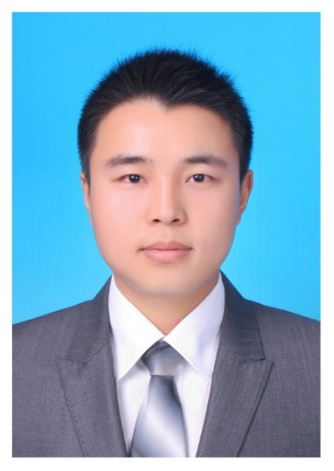 Renwei XiongAssociate Researcher specializing in theoretical and applied seismogeology of IEF, CEA. He has led and participated in over 10 scientific research projects, including those funded by the National Natural Science Foundation of China (NSFC), National Key Research and Development(R&D)Program of China, and Central Public-interest Scientific Institution Basal Research Fund. Additionally, he has directed and contributed to more than 50 technological service projects, including active fault mapping, urban active fault detection, and seismic safety assessments. He has participated in drafting the Guidelines for Seismic Scientific Investigation. Has conducted multiple earthquake emergency response, scientific investigation, and international assistance missions. Served as a member of the Chinese expert team for on-site investigation and disaster loss assessment following the Mw 7.9 Mandalay earthquake in Myanmar.
Yuan Yaoresearch fellow, doctoral supervisor. Director of Urumqi Central Asia Earthquake Research Institute, China Earthquake Administration; Deputy Director of Xinjiang Pamir Intracontinental Subduction National Field Scientific Observation and Research Station; Deputy Director of the Science and Technology Committee of Earthquake Agency of Xinjiang Uygur Autonomous Region; Member of China Youth Federation of Scientific and Technical Workers; Vice Chairman of Seismological Society of Xinjiang; Secretary-General of the China Committee of the Fifth World Young Earth Scientists Network; Deputy Secretary-General of Youth Working Committee of Geological Society of Xinjiang; External Supervisor of China University of Geosciences (Beijing), Institute of Disaster Prevention, and Xinjiang University; Tianshan Talent Young Elite of the Autonomous Region; Young Talent of China Earthquake Administration; Core Member of Scientific and Technological Innovation Team of China Earthquake Administration; Core Member of Tianshan Talent Scientific and Technological Innovation Team of the Autonomous Region. He has presided over 15 national, provincial, ministerial, and bureau-level projects including the National Natural Science Foundation, National Key R&D Program, Autonomous Region Key R&D Program, and Autonomous Region Tianshan Talent Program. As first author or corresponding author, he has published over 30 papers and monographs in journals such as GRL, SRL, JSG, and Seismology and Geology. He has received 10 provincial, ministerial, and bureau-level awards.
Renwei XiongAssociate Researcher specializing in theoretical and applied seismogeology of IEF, CEA. He has led and participated in over 10 scientific research projects, including those funded by the National Natural Science Foundation of China (NSFC), National Key Research and Development(R&D)Program of China, and Central Public-interest Scientific Institution Basal Research Fund. Additionally, he has directed and contributed to more than 50 technological service projects, including active fault mapping, urban active fault detection, and seismic safety assessments. He has participated in drafting the Guidelines for Seismic Scientific Investigation. Has conducted multiple earthquake emergency response, scientific investigation, and international assistance missions. Served as a member of the Chinese expert team for on-site investigation and disaster loss assessment following the Mw 7.9 Mandalay earthquake in Myanmar.
Yuan Yaoresearch fellow, doctoral supervisor. Director of Urumqi Central Asia Earthquake Research Institute, China Earthquake Administration; Deputy Director of Xinjiang Pamir Intracontinental Subduction National Field Scientific Observation and Research Station; Deputy Director of the Science and Technology Committee of Earthquake Agency of Xinjiang Uygur Autonomous Region; Member of China Youth Federation of Scientific and Technical Workers; Vice Chairman of Seismological Society of Xinjiang; Secretary-General of the China Committee of the Fifth World Young Earth Scientists Network; Deputy Secretary-General of Youth Working Committee of Geological Society of Xinjiang; External Supervisor of China University of Geosciences (Beijing), Institute of Disaster Prevention, and Xinjiang University; Tianshan Talent Young Elite of the Autonomous Region; Young Talent of China Earthquake Administration; Core Member of Scientific and Technological Innovation Team of China Earthquake Administration; Core Member of Tianshan Talent Scientific and Technological Innovation Team of the Autonomous Region. He has presided over 15 national, provincial, ministerial, and bureau-level projects including the National Natural Science Foundation, National Key R&D Program, Autonomous Region Key R&D Program, and Autonomous Region Tianshan Talent Program. As first author or corresponding author, he has published over 30 papers and monographs in journals such as GRL, SRL, JSG, and Seismology and Geology. He has received 10 provincial, ministerial, and bureau-level awards.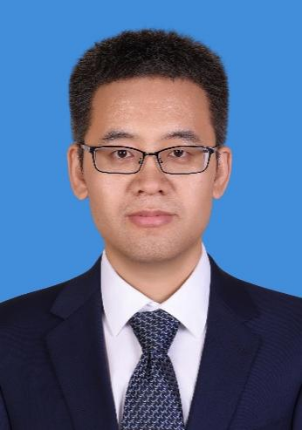 Yongqiang YangPh.D., Professor, Ph.D. Advisor. His research focuses on structural seismic response analysis, seismic damage assessment of buildings, and seismic mitigation and isolation technologies. He serves as a member of the Earthquake Engineering Committee and the Earthquake Emergency Committee of the Seismological Society of China. He has participated in field emergency response, seismic intensity assessment and post-earthquake scientific investigations for many major earthquakes both in China and abroad, including the Wenchuan M8.0 earthquake, the Nepal M8.1 earthquake, the Turkey M7.8 earthquake, the Wushi M7.1 earthquake, and the Myanmar M7.9 earthquake.
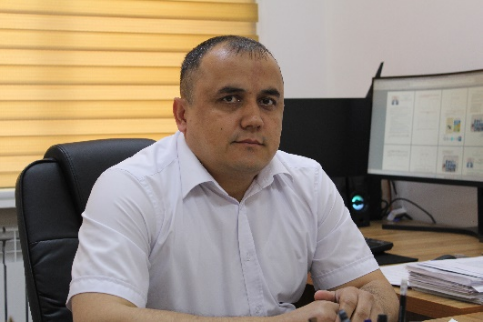 Valijon YusupovDr. Valijon Yusupov is the Head of the Laboratory of Seismogenic Processes at the Institute of Seismology, Academy of Sciences of the Republic of Uzbekistan and holds a Doctor of Philosophy (PhD) degree in Geological and Mineralogical Sciences.He serves as a Senior Research Fellow specializing in seismogenic processes, earthquake precursors, geophysical monitoring, and seismic hazard assessment. His research activities are focused on understanding earthquake generation mechanisms and enhancing seismic safety through advanced geophysical methods, monitoring systems, and data analysis. He has participated in and contributed to numerous national and international scientific research projects in the field of seismology and geophysics.
 -
2.2 Digital Seismic Observation Technology and ApplicationOrganizer:Yanyun Song, Xiaoyi Zhu, Qiang Ma, Li Sun, Jianke Fan , Jiang Yang, Gang Zhao, Bing Zhang
Seismic observation, geophysical detection instruments and technical systems serve as a crucial foundation for scientific research in geoscience and related disciplines, providing essential data for us to study the Earth's internal structure, the laws governing seismic activity and so on. This topic focuses on the frontier research progress and the latest technical system construction trends of seismic observation and geophysical detection instruments, the quality of observation data, and the application method and software of observation data output. The core topics cover: research on seismic observation technology and instrument development as well as application, observation and research progress of deep well and ocean, construction and operation technology of digital seismic station and network, new methods and experiments for seismic observation instrument detection and calibration, data product processing and information release services for digital seismic observation network, seismic observation informatization and standardization, and new method for earthquake monitoring and prediction. The purpose of this topic is to further strengthen the research on seismic observation technology and methods for continents, oceans, and deep wells, through the exchange and discussion of new seismic observation technologies, and to provide strong technical support for the development of earth science.Session Convener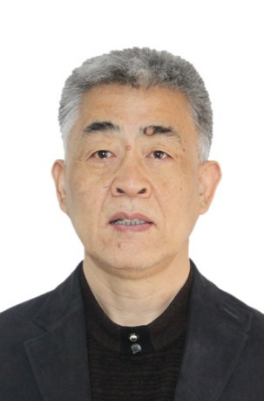 Yanyun SongMr. Yanyun Song ,Secretary of the Party Committee and Deputy Director of the Institute of Earthquake Forecasting, China Earthquake Administration. He received Bachelor and Master of Science degrees from Peking University. He has held leading positions in the Department of Earthquake Monitoring and Forecasting, CEA, China Earthquake Networks Center (CENC), National Earthquake Response Support Service, and the First Monitoring and Application Center, CEA. He has presided over and participated in major projects including the China Digital Seismic Network (CDSN) under China-U.S. cooperation, China’s seismic monitoring system for nuclear test ban verification, the national seismic metrology system, and repeated geodetic surveys for the China International Search and Rescue Team. He was Deputy Chief Designer of National Intensity Quick Reporting and Early Warning Project, and currently chairs the Commission on Seismic Observation Technology, Seismological Society of China. He has served as chief editor of Historical Earthquake Atlas of China's Early Seismic Stations and translator-compiler of Instrumentation in Earthquake Seismology.
 Xiaoyi ZhuXiaoyi Zhu is a Professor-Level Senior Engineer at the Institute of Earthquake Forecasting (IEF), China Earthquake Administration (CEA). She is engaged in frontier technologies for seismic observation and independent development of earthquake observation instruments. She was selected for the third batch of the China Earthquake Administration's New Century Excellent Talents Program. She served as vice chairman of the 10th and 11th Seismic Observation Technology Professional Committee, the Chinese Seismological Society, and was a member of the 2nd National Specialized Seismic Metrology Testing Technology Committee. She has led more than 10 national-level research projects and subprojects, published over 60 academic papers, obtained over 60 national patents, and participated in the formulation of seismic industry standards for seismographs and seismic intensity meters. She has won awards such as the First Prize of the National Science and Technology Progress Award in 2003.
 Qiang MaDr. Qiang Ma is the Deputy Director, Researcher of Institute of Engineering Mechanics, China Earthquake Administration. Recipient of Special Government Allowance of the State Council of the PRC. His research interests mainly focus on strong motion observation, earthquake early warning and engineering emergency disposal technology, as well as real-time earthquake disaster mitigation. He served as Chief Engineer of the National . In recent years, he has presided over 1 Key Project of the National Natural Science Foundation of China, 2 projects under the National Key Research and Development Program. He has been awarded 2 First Prizes of Provincial and Ministerial-level Scientific and Technological Progress Awards, and has published more than 100 academic papers in peer-reviewed journals.
 Li SunPh.D. in Geophysics, professor-level senior engineer, Head of the Early Warning and Rapid Report Department at the China Earthquake Networks Center, Former Deputy Chief Engineer of the National Earthquake Intensity Rapid Reporting and Early Warning Project. She serves as a member of the Seismological Technique Coordination Group and Deputy Leader of its Technical Management Group under the China Earthquake Administration, and is a backbone talent in the CEA’s Talent Pool. Her work centers on earthquake monitoring and early warning research and practical application. In recent years, she has led key national R&D programs, National Natural Science Foundation projects and other provincial-ministerial research initiatives. With over 40 papers published in top journals including Nature Communications, Geophysical Research Letters and Journal of Geophysical Research, she has earned multiple provincial-ministerial awards.
 Jianke FanJianke Fan, as a professor at the Institute of Oceanology, Chinese Academy of Sciences, mainly engages in research on seismic tomography, subduction zone structure and dynamics, and data processing and application of passive ocean bottom seismometer. He has published more than 30 academic papers in journals including Nature Geoscience (2) and GRL. The innovative research achievements include: proposing that the unique flow field characteristics in the upper lower mantle beneath the Philippine Sea Plate record the flow field information of the Pacific lower mantle in the early Cenozoic; and proposing that giant megathrust earthquakes in subduction zones tend to occur in relatively stable areas of the oceanic asthenosphere. His research achievements were selected as one of the Top 10 Advances in Oceanological and Limnological Science and Technology in China in 2021.
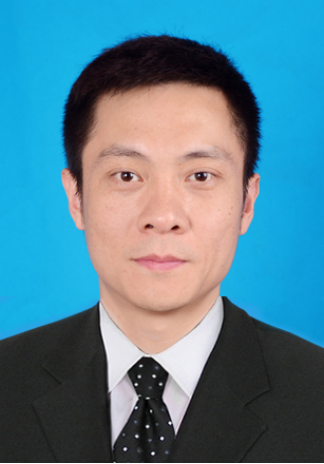 Jiang YangProfessor-level Senior Engineer, serves as Deputy Director of the Institute of Seismological Instrument of Hubei Earthquake Administration and Leader of the Structural Health Monitoring Innovation Team. He was selected as a Backbone Talent of the China Earthquake Administration in 2023. In recent years, he has mainly been engaged in the development of geoscientific instruments and the R&D of software and hardware systems for lightweight structural array monitoring of major urban engineering projects. He has led four key provincial/ministerial-level R&D projects and four key prefectural/bureau-level research projects, and has been in charge of two modernization projects of the China Earthquake Administration. He has published over 30 papers as first or corresponding author, received four provincial/ministerial-level scientific research achievement awards, been granted four invention patents as the first inventor, and led the formulation of one local standards and one association standards.
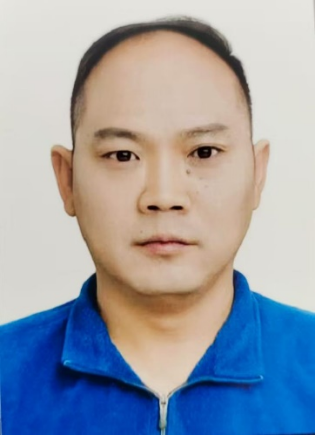 Gang ZhaoGang Zhao is a Professor-Level Senior Engineer at the National Institute of Natural Hazards, Ministry of Emergency Management of China (MEM). He has long been engaged in the research and application of seismic observation technology. He has led over 10 research projects, including sub-projects of the National Science and Technology Support Program, the National Key Research and Development Program, the National Major Science and Technology Special Project on Deep Earth; subsystems of the National Major Science and Technology Infrastructure Projects; as well as Seismic Industry Public Welfare Scientific Research Special Projects and key projects of the China Earthquake Administration. He has developed two types of seismic instruments, which have been widely deployed at seismic stations nationwide. He has also been responsible for the formulation of three industry standards, and has published two monographs and over 20 academic papers. He has been awarded the First, Second, and Third Prizes of the China Earthquake Administration Award for Scientific and Technological Achievements in Earthquake Prevention and Disaster Reduction.
 Bing ZhangAssociate Research Fellow and Master's Supervisor at the Institute of Earthquake Forecasting, China Earthquake Administration, and Deputy Director of the Earthquake Monitoring and Prediction System Evaluation and Design Research Office. His primary research focus is on the research and development of seismic observation instruments. He also serves as the Chief Engineer for the Cross-fault Observation Array System (under the Institute of Earthquake Forecasting) within the National Major Science and Technology Infrastructure Project—the China Earthquake Science Experimental Site Construction Project. Additionally, he holds positions as Member and Secretary-General of the Seismic Observation Technology Professional Committee of the Seismological Society of China, and serves as a Youth Editorial Board Member for the Journal of Earthquake Engineering. He has presided over 3 national-level projects and 3 projects for the transformation of scientific and technological achievements. To date, he has published 14 papers as first author or corresponding author and has been granted 8 national invention patents.
 -
2.3 Seismogenic Process of Strong Earthquakes and Mechanism of Precursor AnomaliesOrganizer: Zhi Chen, Ying Li, Guohong Zhang ,Haibing Li, Yonghua Li, Yujiang Li, Lingyuan Meng, Peng Han, Xiaohui He, Jiupeng Hu
This special session focuses on the full-cycle seismogenic process of continental strong earthquakes worldwide and the formation mechanism of earthquake precursors, and discusses the latest progress and frontiers of interdisciplinary research in this field. Despite the absence of groundbreaking breakthroughs in theories on strong earthquake preparation and mechanisms of precursor anomalies to date, scientists across the global earthquake research community have yielded numerous important achievements and new understandings through half a century of persistent exploration.
Centering on the core goal of gathering cutting-edge international research outcomes and jointly tackling key challenges in earthquake science, this session invites experts at home and abroad to conduct in-depth exchanges and discussions on the seismogenic process of strong earthquakes and the mechanism of precursor anomalies. Participants will share the latest research findings, build scientific consensus, and clarify key development priorities for future research.
The main topics of this session include but are not limited to tectonic settings of strong earthquakes, physical experiments and numerical simulation of strong earthquake processes, multi-disciplinary collaborative observation and integrated research on strong earthquake preparation and precursor evolution, intelligent extraction of earthquake anomalies, as well as new technologies for strong earthquake monitoring and prediction.Session Convener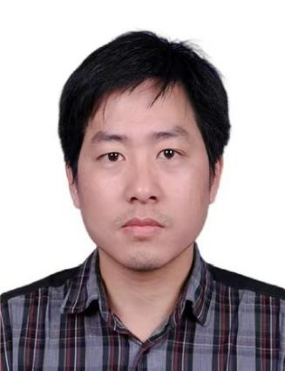 Zhi ChenZhi Chen is a research professor and doctoral supervisor at the Institute of Earthquake Prediction, China Earthquake Administration. He also serves as the Deputy Leader of both the Science and Technology Management Group and the Monitoring & Prediction Group of the Underground Fluid Subject Group, China Earthquake Administration. His research mainly focuses on the genetic mechanism of precursory anomalies of strong earthquakes. He has presided over dozens of scientific research projects and published scores of papers, among which more than 30 are SCI papers as the first or corresponding author in journals including JGR. He has received honors such as the Li Shanbang Outstanding Paper Award. He has been selected into the Young Talent and Backbone Talent Programs of the China Earthquake Administration.
Ying LiProf. Ying Li, is a Research Professor and deputy director of the Institute of Earthquake Forecasting, China Earthquake Administration; His study interests are geochemical precursor of earthquake fluids in the active fault zones, phase transitions and Chemical processes during the metamorphism of subducted materials in subduction zone etc. He has published about 120 papers. He serves as the Chair of the Commission on the Rapid Interdisciplinary Investigation of Significant Earthquakes (RI2sE) under the International Association of Seismology and Physics of the Earth's Interior (IASPEI). He is also working as executive commissioner of the Chinese Society for Mineralogy, Petrology and Geochemistry, commissioner of the Seismological Society of China. He has been responsible for International Geoscience Programme project (IGCP-724) “Fluid Geochemistry and Earthquake Forecasting” from UNESCO and 4 projects founded by the National Nature Science Foundation of China, etc. He works as the deputy commander in Chief of large earthquake scientific expeditions in China and has directed the scientific investigation of 2021 Luxian 6.0 earthquake, 2021 Maduo 7.4 earthquake, 2024 Wushi 7.1 earthquake, etc.
Zhi ChenZhi Chen is a research professor and doctoral supervisor at the Institute of Earthquake Prediction, China Earthquake Administration. He also serves as the Deputy Leader of both the Science and Technology Management Group and the Monitoring & Prediction Group of the Underground Fluid Subject Group, China Earthquake Administration. His research mainly focuses on the genetic mechanism of precursory anomalies of strong earthquakes. He has presided over dozens of scientific research projects and published scores of papers, among which more than 30 are SCI papers as the first or corresponding author in journals including JGR. He has received honors such as the Li Shanbang Outstanding Paper Award. He has been selected into the Young Talent and Backbone Talent Programs of the China Earthquake Administration.
Ying LiProf. Ying Li, is a Research Professor and deputy director of the Institute of Earthquake Forecasting, China Earthquake Administration; His study interests are geochemical precursor of earthquake fluids in the active fault zones, phase transitions and Chemical processes during the metamorphism of subducted materials in subduction zone etc. He has published about 120 papers. He serves as the Chair of the Commission on the Rapid Interdisciplinary Investigation of Significant Earthquakes (RI2sE) under the International Association of Seismology and Physics of the Earth's Interior (IASPEI). He is also working as executive commissioner of the Chinese Society for Mineralogy, Petrology and Geochemistry, commissioner of the Seismological Society of China. He has been responsible for International Geoscience Programme project (IGCP-724) “Fluid Geochemistry and Earthquake Forecasting” from UNESCO and 4 projects founded by the National Nature Science Foundation of China, etc. He works as the deputy commander in Chief of large earthquake scientific expeditions in China and has directed the scientific investigation of 2021 Luxian 6.0 earthquake, 2021 Maduo 7.4 earthquake, 2024 Wushi 7.1 earthquake, etc.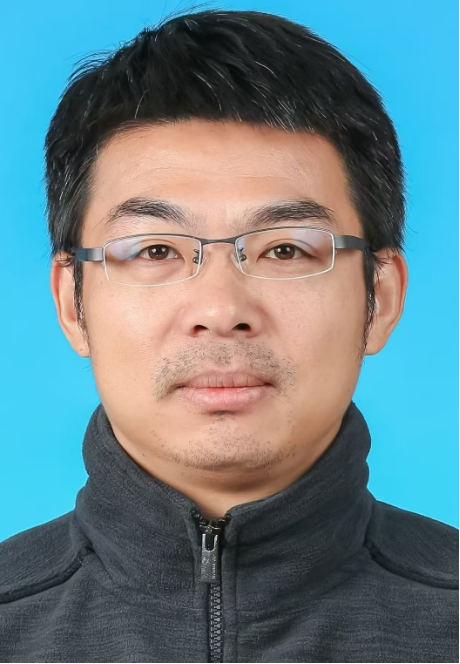 Guohong ZhangGuohong Zhang was born in 1978. He holds a PhD degree and is a senior research fellow. His research focuses on present-day crustal deformation and dynamic modeling. Using geodetic and space-based Earth observation techniques including GNSS, InSAR and multi-source remote sensing, he integrates multi-platform deformation and seismic data to investigate the spatiotemporal characteristics of crustal movement, fine fault geometry and kinematic parameters, fault coupling and locking status, stress evolution, and earthquake rupture processes in mainland China and major active tectonic zones. His research provides scientific support for understanding strong earthquake mechanisms, seismic hazard assessment, and earthquake monitoring and early warning. He has published more than 100 papers in internationally renowned academic journals, and his research achievements are widely recognized by peers at home and abroad. He has presided over and participated in dozens of research projects, including key R&D programs of the Ministry of Science and Technology, key and general projects of the National Natural Science Foundation of China, intergovernmental cooperation projects of the Shanghai Cooperation Organization, and Asian cooperation projects of the Ministry of Foreign Affairs. He has received many academic awards, such as Second Prize of the Science and Technology Progress Award, Chinese Geophysical Society (2023) and Second Prize of the Surveying and Mapping Science and Technology Progress Award, Chinese Society for Geodesy, Photogrammetry and Cartography (2019).
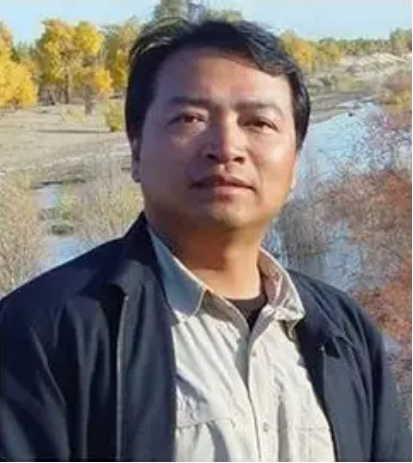 Haibing LiHaibing Li was born in 1966, holds a Ph.D. and is a Research Professor. Chief Scientist of the National Key Laboratory of Deep Earth Exploration and Mineral Exploration, and Director of the Key Laboratory of Continental Dynamics, Ministry of Natural Resources. He has long been engaged in research on active tectonics, earthquake mechanisms, and fault dynamics. He has led over 20 projects, including those under the National Science and Technology Major Project for Deep Earth Exploration and key projects of the National Natural Science Foundation of China. He has published over 410 papers in journals such as Science, Geology, EPSL, NSR, JGR-SE, and GRL, as well as 7 monographs. He has received one Second Prize of the National Natural Science Award, one First Prize and three Second Prizes at the provincial and ministerial levels. Five research achievements have been selected among the "Top Ten Major Geological Scientific and Technological Progresses of the Year" by the Geological Society of China and the "Top Ten Geological Scientific and Technological Progresses of the Year" by the China Geological Survey.
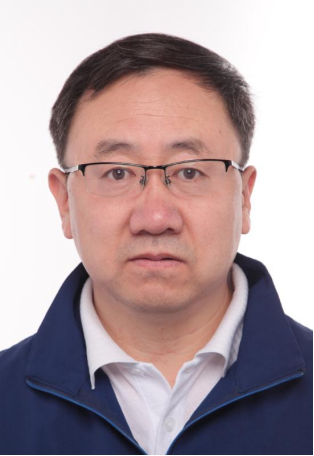 Yonghua LiYonghua Li is a research professor and doctoral supervisor at the Institute of Geophysics, China Earthquake Administration. His research primarily focuses on the structure and evolution of the crust and mantle. He has published over 100 papers, including those as first author or as corresponding author in journals such as EPSL and JGR. He have earned several awards, including the First Prize (R1) and Second Prize (R2) of the Outstanding Achievement Award in Earthquake Prevention and Disaster Reduction from the China Earthquake Administration. He has received the Zhao Jiuzhang Outstanding Young and Middle-Aged Scientist Award. He currently serves as Associate Editor-in-Chief of Earthquake Science and Executive Editor-in-Chief of Reviews of Geophysics and Planetary Physics.
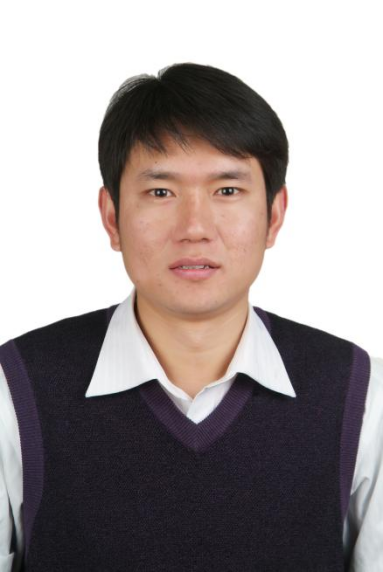 Yujiang LiProf.Yujiang Li, a Research Professor at the National Institute of Natural Hazards, Ministry of Emergency Management of China. His research mainly focuses on tectonic stress–strain fields, the mechanisms of strong earthquake preparation, and geodynamics. He has led more than 20 research projects, including projects under the National Science and Technology Major Project on Deep Earth Probe and Mineral Resources Exploration, the National Natural Science Foundation of China. He has published more than 60 papers in journals such as EPSL, GRL, and JGR-SE. He proposed the new understanding that the gradient of gravitational potential energy is the primary controlling mechanism of present-day crustal deformation along the southeastern margin of the Tibetan Plateau. He also established a high-resolution three-dimensional stress model for the Sichuan–Yunnan region and compiled Coulomb stress change maps for major faults across mainland China, providing a mechanical basis for revealing the mechanisms of spatial differences in strong earthquakes and identifying high-risk seismic zones.
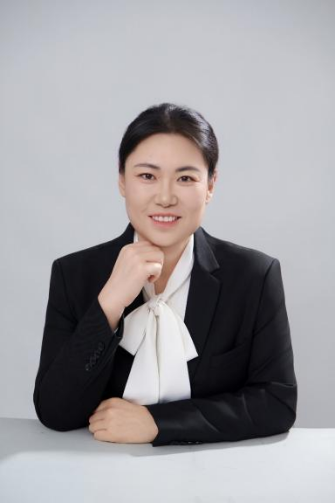 Lingyuan MengLingyuan Meng was born in June 1983, holds a Ph.D. in Solid Earth Geophysics and is a Research Professor. She currently serves as Director and Research Fellow of the Earthquake Prediction Department at the China Earthquake Networks Center. Her main research fields cover seismic activity and seismic hazard assessment. She has presided over and participated in more than 20 scientific research projects, including programs funded by the National Key R&D Program of China and the National Natural Science Foundation of China. She has published over 80 academic papers in authoritative international and domestic journals, such as BSSA, PAGEOPH, and Chin. J. Geophys. he acts as the Group Leader of the National Seismological Discipline Group for Short-term and Imminent Earthquake Prediction, Deputy Group Leader of the National Earthquake Situation Tracking Research Working Group, and Expert Member of the National On-site Earthquake Emergency Working Group of the China Earthquake Administration (CEA). She has successively participated in the on-site emergency response for multiple major earthquakes, including the MS 6.5 Ludian earthquake in Yunnan Province, the MS 7.0 Jiuzhaigou earthquake in Sichuan Province, the MS 6.4 Yangbi earthquake in Yunnan Province, and the MS 7.1 Wushi earthquake in Xinjiang Uygur Autonomous Region.
Peng HanPeng Han was born in 1985, he is an associate professor. His research focuses on geoelectromagnetism, statistical seismology, earthquake prediction, and seismic risk assessment. He has led more than 20 research projects, including the Excellent Young Scientists Fund and General Program projects of the National Natural Science Foundation of China, as well as projects under the National Key Research and Development Program of China. He was awarded the Excellent Paper Award (Gold Prize) of the Institute of Electrical Engineers of Japan, the Fu Chengyi Youth Science and Technology Award of the Chinese Geophysical Society, and the First Prize of the 14th Gansu Provincial Outstanding Technological Innovation Achievement Award for Employees. He serves as an Executive Committee Member of the 4th Committee on Geoelectromagnetism of the Chinese Geophysical Society (2023–2027), Vice Chair of the Committee on Numerical Earthquake Prediction of the Seismological Society of China (2023–2026), and Vice Chair of the Committee on Time-varying Geophysics of the Seismological Society of China (2025–2030). To date, he has published more than 90 SCI-indexed papers in journals such as SG, GRL, JGR, GJI, IEEE journals, and Geophysics, as well as three AGU book chapters, with more than 1,800 citations.
Lingyuan MengLingyuan Meng was born in June 1983, holds a Ph.D. in Solid Earth Geophysics and is a Research Professor. She currently serves as Director and Research Fellow of the Earthquake Prediction Department at the China Earthquake Networks Center. Her main research fields cover seismic activity and seismic hazard assessment. She has presided over and participated in more than 20 scientific research projects, including programs funded by the National Key R&D Program of China and the National Natural Science Foundation of China. She has published over 80 academic papers in authoritative international and domestic journals, such as BSSA, PAGEOPH, and Chin. J. Geophys. he acts as the Group Leader of the National Seismological Discipline Group for Short-term and Imminent Earthquake Prediction, Deputy Group Leader of the National Earthquake Situation Tracking Research Working Group, and Expert Member of the National On-site Earthquake Emergency Working Group of the China Earthquake Administration (CEA). She has successively participated in the on-site emergency response for multiple major earthquakes, including the MS 6.5 Ludian earthquake in Yunnan Province, the MS 7.0 Jiuzhaigou earthquake in Sichuan Province, the MS 6.4 Yangbi earthquake in Yunnan Province, and the MS 7.1 Wushi earthquake in Xinjiang Uygur Autonomous Region.
Peng HanPeng Han was born in 1985, he is an associate professor. His research focuses on geoelectromagnetism, statistical seismology, earthquake prediction, and seismic risk assessment. He has led more than 20 research projects, including the Excellent Young Scientists Fund and General Program projects of the National Natural Science Foundation of China, as well as projects under the National Key Research and Development Program of China. He was awarded the Excellent Paper Award (Gold Prize) of the Institute of Electrical Engineers of Japan, the Fu Chengyi Youth Science and Technology Award of the Chinese Geophysical Society, and the First Prize of the 14th Gansu Provincial Outstanding Technological Innovation Achievement Award for Employees. He serves as an Executive Committee Member of the 4th Committee on Geoelectromagnetism of the Chinese Geophysical Society (2023–2027), Vice Chair of the Committee on Numerical Earthquake Prediction of the Seismological Society of China (2023–2026), and Vice Chair of the Committee on Time-varying Geophysics of the Seismological Society of China (2025–2030). To date, he has published more than 90 SCI-indexed papers in journals such as SG, GRL, JGR, GJI, IEEE journals, and Geophysics, as well as three AGU book chapters, with more than 1,800 citations.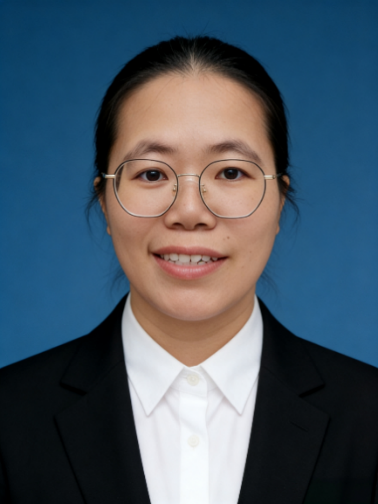 Xiaohui HeXiaohui He was born in 1991, she is an Associate Professor. Her research focuses on rapid determination of earthquake source parameters, seismogenic structures, and regional stress fields. She has led projects funded by the National Natural Science Foundation of China and sub-projects of the National Key R&D Program of China, and has published more than 50 papers in journals including GRL, JGR, and Science China Earth Science. She has developed several algorithms for determining rupture directivity and focal depth of moderate earthquakes, established a focal mechanism database and regional stress field model for the southeastern Tibetan Plateau, and revealed the characteristics of deep fault interactions, stress heterogeneity, and strain partitioning near fault terminations within complex fault systems, providing important scientific insights for seismic hazard assessment.
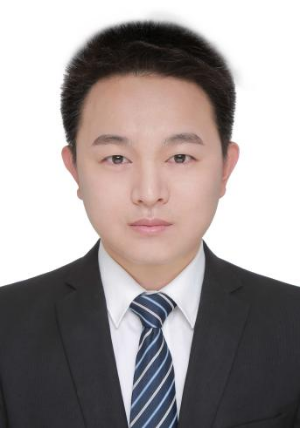 Jiupeng HuJiupeng Hu, male, born in 1987, PhD. He engages in fundamental research on active source exploration, seismic numerical simulation, and AI-based seismic data processing. Currently, he is responsible for the commercialization of scientific and technological achievements at the Institute of Geophysics, China Earthquake Administration, and serves as the Legal Representative/General Manager of Beijing Qiusuo Shuzhi Technology Development Co., Ltd.
 -
2.4 New Methods for Intelligent Identification and Integrated Analysis of Multi-Source Precursory Anomalies for Earthquake PredictionOrganizer:Lihua Fang,Xiaodong Zhang,Lianqing Xiong,Pan Xiong,Xinming Wu,Xiaodong Song,Lei Bai,Alisher Rasulov,Aisa Yisimayili
This session focuses on frontier progress and practical exploration in applying artificial intelligence technologies to the fusion analysis and prediction of multi-source earthquake precursor data. Earthquake precursor observation has developed into an integrated monitoring system spanning multiple physical fields, including deformation, subsurface fluids, geochemistry, electromagnetism, and thermal infrared. However, efficient fusion of heterogeneous multi-source data and automatic identification of anomalous signals remain major challenges. The session aims to exchange recent research findings on AI methods, including deep learning, graph neural networks, and spatiotemporal sequence modeling, in automatic detection of precursor anomalies, multi-source data association analysis, and integrated probabilistic prediction, and to explore a new paradigm of intelligent prediction that combines data-driven approaches with physical constraints. Core topics include joint representation and fusion strategies for precursor signals based on multimodal learning, intelligent identification and evolution analysis of spatiotemporal patterns in seismicity, anomaly detection and knowledge mining from large-scale precursor datasets, and practical exploration of cross-border collaborative prediction using multi-source data for the Tianshan and Central Asia region. The session welcomes research outcomes ranging from algorithmic innovation to operational applications, encourages interdisciplinary collaboration, and promotes the deeper translation of AI-enabled earthquake prediction into operational practice.Session Convener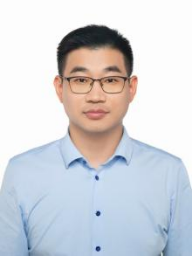 Lihua FangLihua Fang is Deputy Director, Research Professor, and Doctoral Supervisor at the Institute of Earthquake Forecasting, China Earthquake Administration, and a recipient of the State Council Special Allowance. His research focuses on artificial intelligence seismology, full-spectrum vibration monitoring, microseismic monitoring and precise location, ambient noise tomography, and fault-zone structure and deformation. He serves as Associate Editor of SRL and Earthquake Science, leads the CEA “Real-time Seismology” Innovation Team, has undertaken multiple national research projects, and has published more than 200 papers.
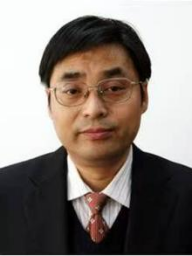 Xiaodong ZhangXiaodong Zhang is a Second-Class Research Professor at the Institute of Earthquake Forecasting, China Earthquake Administration, and Principal Professor at the University of Chinese Academy of Sciences. He serves as Executive Director of the China Association for Disaster Prevention, Chair of its Artificial Intelligence Branch for Disaster Prevention and Mitigation, Director of the Seismological Society of China’s Earthquake Artificial Intelligence Committee, and editor or editorial board member of leading seismological journals. He has led national and ministerial research projects and received multiple CEA Outstanding Scientific and Technological Achievement Awards.
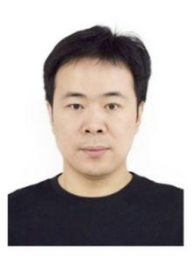 Lianqing ZhouLianqing Zhou is a Research Professor at the Institute of Earthquake Forecasting, China Earthquake Administration. His work focuses on artificial intelligence seismology and non-natural earthquakes. He serves as Deputy Director of the New Earthquake Forecasting Technology Department and the CEA Key Laboratory of Earthquake Forecasting, Head of the Earthquake Artificial Intelligence and New Methods Discipline Group, and Deputy Chief Scientist and Deputy Chief Engineer of the China Earthquake Science Experimental Field. He has undertaken or led more than 20 research projects and published over 80 papers.
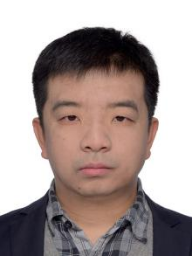 Xiong PanXiong Pan is a Research Professor at the Institute of Earthquake Forecasting, China Earthquake Administration, with a Ph.D. in science. His research addresses ionosphere-atmosphere-lithosphere coupling mechanisms and disaster-environment effects, with emphasis on intelligent identification of earthquake anomalies and prediction applications using artificial intelligence and satellite big data. He has led projects supported by the National Natural Science Foundation of China, the National Key R&D Program, and the High-Resolution Earth Observation Program, published more than 60 papers, authored Earthquake Infrared Remote Sensing, and received several scientific and technological awards.
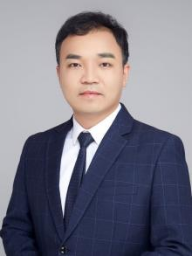 Xinming WuXinming Wu is Professor and Doctoral Supervisor at the School of Earth and Space Sciences, University of Science and Technology of China, and a selected member of a national high-level overseas young talents program. He received his Ph.D. in geophysics from Colorado School of Mines in 2016 and conducted postdoctoral research at the University of Texas at Austin from 2016 to 2019. His research focuses on artificial intelligence geophysics. He has received the SEG Virgil Kauffman Gold Medal, the J. Clarence Karcher Award, and the Fu Chengyi Young Scientist Award.
 Xiaodong Song/
 Lei Bai/
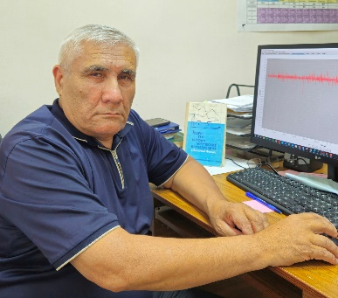 Alisher RasulovAlisher Rasulov is a Senior Research Fellow at the Laboratory of Seismogenic Processes, Institute of Seismology, Academy of Sciences of the Republic of Uzbekistan.His scientific activities are focused on seismogenic processes, earthquake precursors, hydrogeoseismology, hydrogeochemical monitoring, and seismic hazard assessment. His research is aimed at investigating the mechanisms of earthquake generation and development, analyzing variations in hydrogeoseismological and hydrogeochemical parameters, and identifying their relationships with seismic processes.Alisher Rasulov conducts scientific research using modern monitoring systems, data processing techniques, and statistical analysis methods to evaluate changes in the hydrodynamic, hydrogeochemical, and gas-geochemical parameters of groundwater and to determine their genetic relationship with earthquake activity. His work contributes to the identification of earthquake precursors and the enhancement of seismic safety in seismically active regions.Throughout his scientific career, he has participated in numerous national and international research projects in the fields of seismology, hydrogeoseismology, and hydrogeochemistry, making significant contributions to their successful implementation. He is also the author and co-author of scientific publications, conference presentations, and applied research studies, contributing to the advancement of hydrogeoseismological investigations in Uzbekistan.
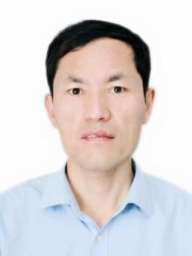 Aisa YisimayiliAisa Yisimayili is a Senior Engineer and Young Talent at the Earthquake Administration of Xinjiang Uygur Autonomous Region. His research focuses on seismo-electromagnetism and earthquake analysis and forecasting. He serves as a member of the CEA Short-Term Tracking Electromagnetic Discipline Group, the first Youth Editorial Committee of South China Journal of Seismology, and the Seismological Society of China’s Multi-sphere Coupling Committee. He has led regional and CEA science projects, participated in major research tasks, and published more than 60 papers, including 27 as first or corresponding author.
 -
3.1 High-Resolution Geophysical Exploration and Deep Structure of the Tianshan Seismic BeltOrganizer:Lijun Chang、Weilai Wang、Li Li 、Erik Alipuly、Timur Mamarozikov、 Mingshuai Tang、Zhibin Zhang、Xuewei Bao
This session focuses on using the latest geophysical exploration techniques to reveal the detailed deep structure of the Tianshan seismic belt. The session will showcase and discuss joint active and passive source imaging techniques based on dense seismic arrays (including broadband seismology, ambient noise, and active sources), as well as associated methods for data quality control, joint inversion, and interpretation. Core content includes sharing the latest imaging results of high-resolution crustal and upper mantle velocity structures, anisotropy, and interface morphology beneath the Tianshan region and its adjacent areas, and exploring the influence of these deep structural features on the seismogenic environment, rupture processes, and geological hazards of large earthquakes. The session encourages the integration and interpretation of geophysical exploration data with multidisciplinary data such as geodesy and geology, aiming to directly apply exploration outcomes to refine seismic hazard analysis and construct seismogenic models, thereby providing a solid deep structural basis for earthquake prediction research and risk mitigation in the Tianshan region.Session Convener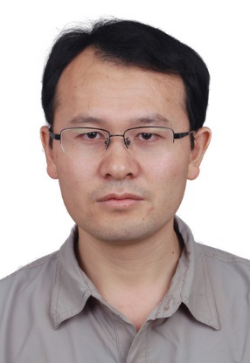 Lijun ChangProfessor and Deputy Director of the Department of Earth’s Interior Physics, Institute of Geophysics, China Earthquake Administration (CEA). He is a CEA Backbone Talent and serves on the editorial boards of Reviews of Geophysics and Planetary Physics and Journal of Guilin University of Technology. His research focuses on seismic anisotropy, deep Earth structures, and geodynamics. He has led more than 30 research projects, including those funded by the NSFC, and has published over 70 scientific papers. He has participated in seven Chinese National Antarctic Research Expeditions. His honors include the First Prize for Outstanding Achievements in Earthquake Prevention and Disaster Reduction (CEA), the Second Prize for Scientific and Technological Progress from the Chinese Geophysical Society, and the Li Shanbang Award for Outstanding Young Seismological Papers.
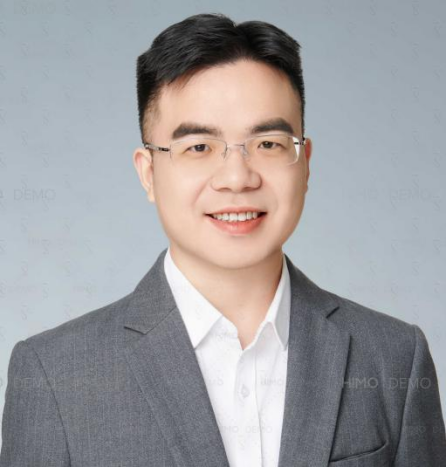 Weilai WangProfessor at the Institute of Geophysics, China Earthquake Administration (CEA). His research interests include intelligent earthquake monitoring systems, full-spectrum vibration monitoring, 3D fault imaging, and deep structural imaging. He has led projects funded by the NSFC (Young Scientists and General Programs) and the National Key R&D Program of China. He has published over 20 SCI papers as first/corresponding author in leading journals such as EPSL, CSES, and JGR. He has received Outstanding Paper Awards and Science and Technology Progress Awards from the Chinese Geophysical Society and the Seismological Society of China, and has been selected for CEA talent programs.
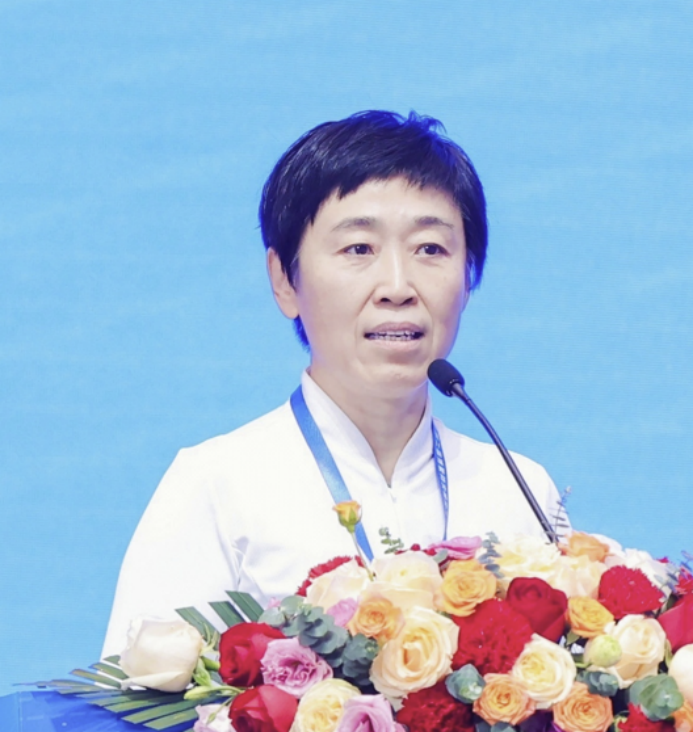 Li LiDr. Li Li is a Professor and Doctoral Supervisor at the Institute of Geophysics, China Earthquake Administration (IGP/CEA), and currently serves as the Director of the Institute. Her research focuses on seismic observation system design, deep-borehole seismic observation technology development, and extraction of weak signals under high-noise backgrounds. She is currently in charge of the China Seismic Array Detection project, and serves as Chief Engineer of the China Seismic Experimental Site (CSES) construction project (a major national scientific and technological infrastructure) and Chief Designer of the Belt and Road Seismic Monitoring Network project. She is Vice President of the International Association of Seismology and Physics of the Earth's Interior (IASPEI), Secretary General of the Asian Seismological Commission (ASC), Vice President of the Seismological Society of China, and Vice President of the Chinese Geophysical Society.
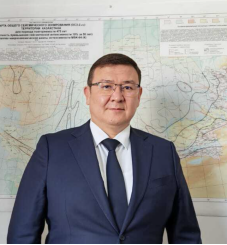 Erik AlipulyMr. Erik Alipuly currently serves as Deputy Director of the National Scientific Center for Seismological Observations and Research (NSCSOR) under the Ministry of Emergency Situations of the Republic of Kazakhstan, and as Director of the China Kazakhstan Joint Earthquake Research Center. A renowned seismologist of Kazakhstan, he has long been engaged in research and management in the fields of seismic monitoring technologies, earthquake forecasting and early warning systems, and seismic risk assessment. He actively promotes geodynamic studies of the Tien Shan region and possesses extensive practical experience and academic influence in regional earthquake disaster prevention and mitigation capacity building.
 Timur MamarozikovDr. Timur Mamarozikov currently serves as the Head of the Laboratory of Instrumental Seismology and Seismometry at the Institute of Seismology, Academy of Sciences of the Republic of Uzbekistan. His primary research interests focus on quantitative analysis of seismic activity and the digital reconstruction of historical seismic data. At present, he leads two core research projects: one involves the systematic assessment of spatiotemporal evolution characteristics of regional seismic activity dynamics using seismic entropy and the Vp/Vs parameter; the other is the digitization of the seismogram archive dating back to 1953, aimed at establishing a long term, traceable seismic waveform database to support subsequent source parameter inversion and seismicity statistics. He has extensive experience in processing historical seismic records and analyzing seismicity, and is committed to deepening the understanding of earthquake preparation processes through data driven approaches.
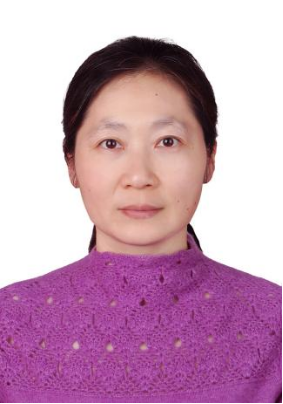 Mingshuai TangMaster’s degree holder, Professor-level Senior Engineer, and Master’s supervisor. He currently serves as Deputy Director of the Science and Technology Committee of the Earthquake Agency of Xinjiang. He joined the agency in 2000 and has been engaged in seismology-related operations and research. He has received one Third Prize for Scientific and Technological Progress at the autonomous region level, as well as six first- and second-prize awards at the bureau level. He has led one NSFC General Project, one Key R&D Project of Xinjiang Autonomous Region, and three other provincial/ministerial research projects. He has also participated as a supervising expert in two provincial/ministerial projects. He holds one national invention patent as the first inventor and has published more than 30 papers. He was selected into the CEA Young Talent Pool (2019) and Backbone Talent Pool (2022). His research on the crustal structure of Xinjiang has yielded important insights into the basin-mountain coupling and seismogenic environment of the Tianshan region. He proposed a method for earthquake location in sparse network regions of Xinjiang by combining phase arrival times and azimuths, significantly improving location accuracy. By combining receiver function H κ stacking with a time-window sliding method, he studied the physical property changes of crustal media before and after moderate-to-strong earthquakes in Xinjiang, obtaining new insights.
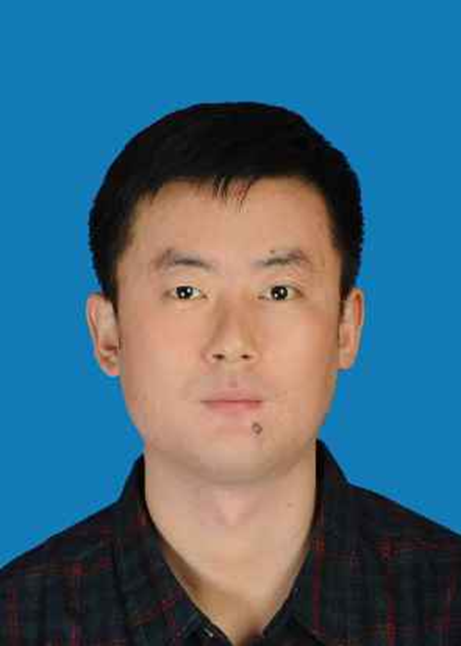 Zhibin ZhangMaster’s degree in Geophysics, Senior Engineer, and CEA Young Talent. His research focuses on earthquake early warning, seismic activity analysis, and 3D velocity structure. He has led or participated in over 20 research projects, including three provincial/ministerial-level projects (or sub-projects) as principal investigator. He has published more than 10 papers as first author in journals such as Tectonics, Chinese Journal of Geophysics, and Seismology and Geology, with over 40 citations.
Xuewei BaoProfessor (Researcher) and Doctoral Supervisor at Zhejiang University. He has long been engaged in research on crust-mantle structure and seismic activity. He has published 46 papers, including 22 as first/corresponding author in SCI journals such as Science and Nature subjournals, with over 3,000 citations. In 2018, he was selected for the Thousand Talents Program for Young Professionals (Youth Program) by the Organization Department of the CPC Central Committee. In 2019, he received the First Prize of Natural Science Award from the Ministry of Education. He currently serves as Deputy Director of the Seismology Committee of the Seismological Society of China, and as an editorial board member for Earthquake Science and Reviews of Geophysics and Planetary Physics.
Zhibin ZhangMaster’s degree in Geophysics, Senior Engineer, and CEA Young Talent. His research focuses on earthquake early warning, seismic activity analysis, and 3D velocity structure. He has led or participated in over 20 research projects, including three provincial/ministerial-level projects (or sub-projects) as principal investigator. He has published more than 10 papers as first author in journals such as Tectonics, Chinese Journal of Geophysics, and Seismology and Geology, with over 40 citations.
Xuewei BaoProfessor (Researcher) and Doctoral Supervisor at Zhejiang University. He has long been engaged in research on crust-mantle structure and seismic activity. He has published 46 papers, including 22 as first/corresponding author in SCI journals such as Science and Nature subjournals, with over 3,000 citations. In 2018, he was selected for the Thousand Talents Program for Young Professionals (Youth Program) by the Organization Department of the CPC Central Committee. In 2019, he received the First Prize of Natural Science Award from the Ministry of Education. He currently serves as Deputy Director of the Seismology Committee of the Seismological Society of China, and as an editorial board member for Earthquake Science and Reviews of Geophysics and Planetary Physics. -
3.2 Earthquake deformation by modern geodesy and its modelingOrganizer:Xinjian Shan、Jiao Liu、Aidyn、Ilkhom、Salvatore Stramondo、Guohong Zhang、Guirong Li、Zukhriddin Shukurov
In this session we would like to explore and discuss the crust deformation features in the intracontinental earthquakes cycles based on all available geodetic methods, including GNSS, InSAR and other techniques. The applications of the geodetic observations and techniques have significantly improved our understandings on earthquakes and the related research have been pervasively conducted in seismic community in last decades. The session intends to cover all the research fields in geodesy applications on earthquake studies. The focused theme is to discuss how accurate geodetic observations help to update and challenge our current earthquake knowledge, particularly in the lithosphere rheology structure, the hazard analysis, and the varying fault behaviors in seismic cycles. We would like to call for submissions involving new applications of geodetic techniques on earthquake cycle deformations as well as reviews on the geodesy development in the earthquake application. This is a session to review and promote the revolutionary contribution of the geodetic observation to our earthquake research.Session Convener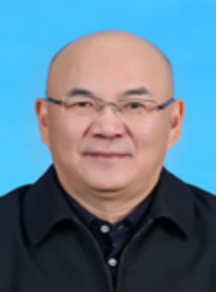 Xinjian ShanXinjian Shan, male, born in 1966, holds a PhD in Science and is a Grade II Research Professor and doctoral advisor. He has long been engaged in research on crustal deformation observation and dynamics, active fault deformation characteristics, interseismic–coseismic–postseismic tectonic deformation evolution, seismic hazard assessment, earthquake rupture and recurrence models, as well as multi-source remote sensing and fault activity monitoring. He has presided over nearly 30 national-level projects, including the National Key R&D Program projects, key programs of the National Natural Science Foundation of China, national science and technology major projects, and key international (regional) cooperation projects. He has published more than 100 SCI papers in leading geoscience journals such as EPSL, GRL, JGR and RSE, and authored 3 monographs. Using geodetic and space-based observation techniques including GNSS, InSAR, LiDAR and multi-source remote sensing, he systematically investigates the spatiotemporal characteristics of crustal movement, fine fault geometry and kinematic parameters, fault coupling and locking status, stress evolution and earthquake rupture processes in mainland China and major active tectonic zones, providing scientific support for understanding strong earthquake mechanisms, seismic hazard assessment, and earthquake monitoring and early warning.
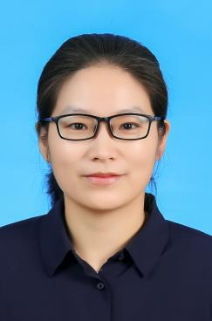 Jiao LiuAssociate Research Professor at the Institute of Geology, China Earthquake Administration (CEA). She received her Ph.D. in Geological and Mineralogical Sciences from Lomonosov Moscow State University. Her main research interests include active tectonics, geodynamics, and seismic hazard assessment. She has published seven SCI papers as first or corresponding author and has served as principal investigator for more than 10 research projects, including six national-level projects. She also maintains extensive international collaboration and exchanges with researchers from Russia, Central Asia, and other countries.
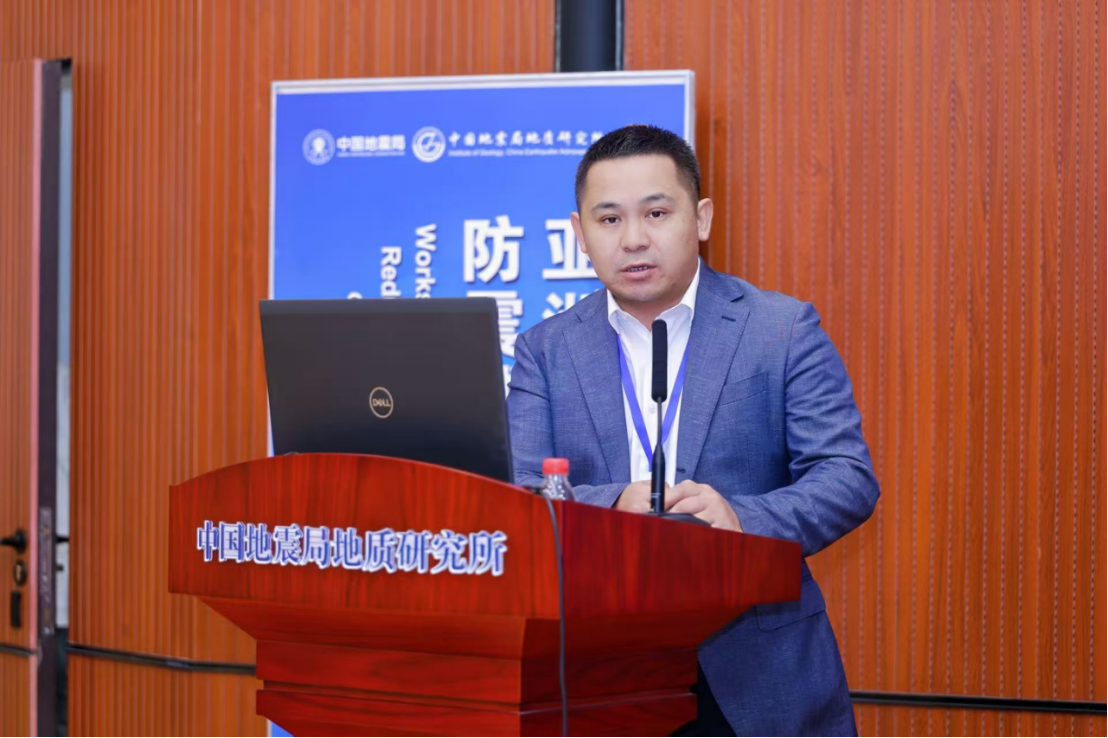 AidynAidyn S. Mukambayev is a Kazakhstani specialist in the field of seismology and seismic monitoring. He serves as Deputy Director of the Data Center at the Institute of Geophysical Research of the National Nuclear Center of the Republic of Kazakhstan and is engaged in scientific research related to interpretation of seismic signals of various origins.His research interests include seismic data processing, development of seismic station infrastructure, and international cooperation in monitoring compliance with the Comprehensive Nuclear-Test-Ban Treaty.He has participated in international projects aimed at the creation and updating of earthquake catalogs for Central Asia, as well as in seismic hazard assessment.He also takes part in field paleoseismological expeditions studying active faults in Kazakhstan.In recent years, his work has focused on the study of glacial seismicity in the high-altitude Tien Shan — a relatively new field involving the recording of seismic events generated by glacier movement and degradation.
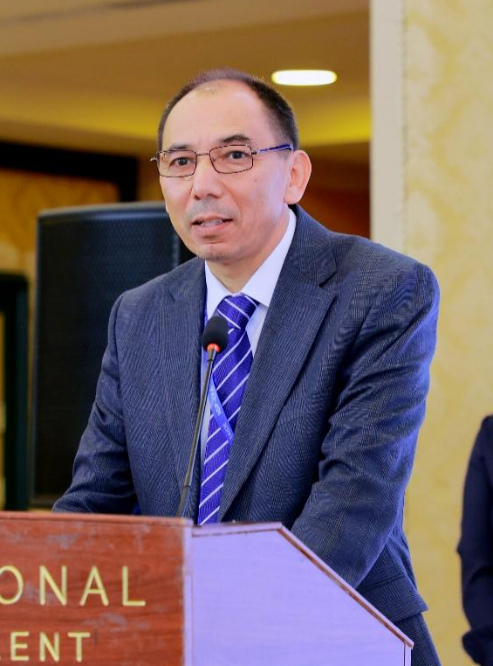 IlkhomIlkhom Alimukhamedov Mizratovich is a specialist in the fields of geodynamics, geophysics, and seismology, currently serving as Deputy Director of the Institute of Seismology of the Academy of Sciences of the Republic of Uzbekistan. He commenced his scientific career at the Institute in 1998 as a Research Fellow in the Laboratory of Geodynamics, where he contributed to fundamental and applied investigations related to the tectonic evolution and geodynamic processes of the Earth’s crust. Dr. Alimukhamedov holds a Ph.D. in Geological and Mineralogical Sciences. In 2011, he successfully defended his dissertation in the specialty 04.00.22 – Geophysics at the Specialized Scientific Council under the Institute of Seismology. He possesses 28 years of scientific and research experience, 14 years of pedagogical activity, and over 20 years of administrative and managerial practice. He has been serving in his current executive position since 2024. The principal scientific directions of Dr. Alimukhamedov’s research encompass the investigation of crustal deformations through integrated geological, geodetic, and space-geodetic methodologies. His studies are focused on identifying and analyzing geodynamic processes associated with seismic activity, including the assessment of earthquake precursory phenomena in relation to the physical properties of the Earth’s crust and regional geological structures. His scientific contributions also include the application of modern geophysical and engineering-geophysical approaches for determining the physical and mechanical characteristics of near-surface geological formations and soils, aimed at improving geotechnical evaluation and seismic hazard assessment.
 Salvatore StramondoPhD Dr.Research Director at Istituto Nazionale di Geofisica e Vulcanologia.Laurea (M.S.) degree in electronic engineering in 1996 ( University La Sapienza, Rome, Italy), Ph.D. in Geoinformation in 2007 (University Tor Vergata, Rome, Italy). He joined the Istituto Nazionale di Geofisica e Vulcanologia (INGV) in 1997, where he is currently the Director of National Earthquake Observatory. PI at the European, German and Japanese Space Agencies. Editor of Remote Sensing journal, Associate Editor of IEEE GRSL and International Journal of Applied Earth Observation and Geoinformation. Senior Member of IEEE GRSS.
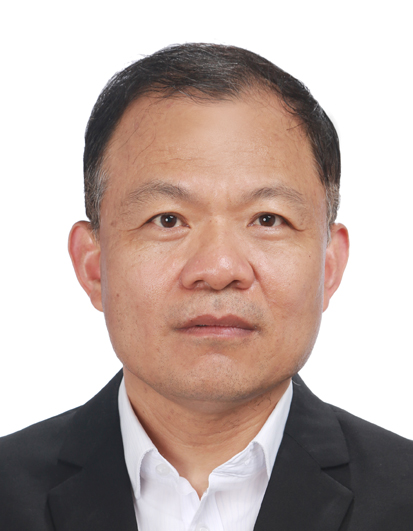 Guojie MengDr. Guojie Meng is a Professor and PhD Supervisor at the Institute of Earthquake Forecasting, China Earthquake Administration (CEA), as well as Director of the Key Laboratory for Earthquake Prediction. His research focuses on geodesy, contemporary active tectonics and earthquake prediction. He has led more than 20 research projects, including programs funded by the National Natural Science Foundation of China, key R&D projects of the Ministry of Science and Technology, National Basic Resource Surveys, and the Lancang‑Mekong Cooperation Initiative sponsored by China’s Ministry of Foreign Affairs. As principal investigator, he has carried out bilateral seismic research collaborations with scientists from the United States, Russia, Japan, Thailand, Myanmar and Laos et c. He was selected into the CEA Leading Talent Program and the CEA Innovative Research Team Program in 2023. He has received five science and technology awards and the Outstanding Staff Award from the Ministry of Emergency Management in 2021. To date, he has published over 120 peer‑reviewed articles in prestigious journals such as JGR, GRL, GJI and BSSA, and co-authored five academic monographs. Under his supervision, his postdoctoral and PhD candidates have published more than 20 papers. He currently serves as a director of academic societies including the Seismological Society of China and the Chinese Society for Geodesy, Photogrammetry and Cartography, and holds editorial board or special issue editor positions for multiple domestic and international academic journals.
Guohong Zhang/
Guojie MengDr. Guojie Meng is a Professor and PhD Supervisor at the Institute of Earthquake Forecasting, China Earthquake Administration (CEA), as well as Director of the Key Laboratory for Earthquake Prediction. His research focuses on geodesy, contemporary active tectonics and earthquake prediction. He has led more than 20 research projects, including programs funded by the National Natural Science Foundation of China, key R&D projects of the Ministry of Science and Technology, National Basic Resource Surveys, and the Lancang‑Mekong Cooperation Initiative sponsored by China’s Ministry of Foreign Affairs. As principal investigator, he has carried out bilateral seismic research collaborations with scientists from the United States, Russia, Japan, Thailand, Myanmar and Laos et c. He was selected into the CEA Leading Talent Program and the CEA Innovative Research Team Program in 2023. He has received five science and technology awards and the Outstanding Staff Award from the Ministry of Emergency Management in 2021. To date, he has published over 120 peer‑reviewed articles in prestigious journals such as JGR, GRL, GJI and BSSA, and co-authored five academic monographs. Under his supervision, his postdoctoral and PhD candidates have published more than 20 papers. He currently serves as a director of academic societies including the Seismological Society of China and the Chinese Society for Geodesy, Photogrammetry and Cartography, and holds editorial board or special issue editor positions for multiple domestic and international academic journals.
Guohong Zhang/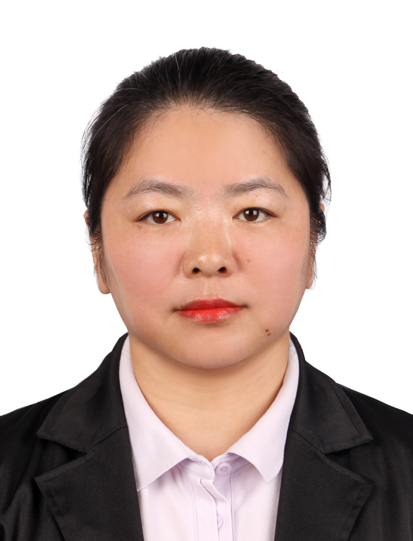 Guirong LiSenior Engineer. She graduated from the College of Resources and Environmental Sciences, Xinjiang University, in 2008 with a Master’s degree in Cartography and Geographic Information Systems. She is currently Deputy Director of the Urumqi Central Asia Earthquake Research Institute, China Earthquake Administration (CEA). Her work focuses on GNSS data processing and analysis, and she applies geodetic deformation observations to earthquake trend assessment. She has led one intergovernmental international cooperation project, one Spark Program for Earthquake Sciences (Young Scientist), one NSFC General Project of Xinjiang Autonomous Region, and one Key R&D Project of Xinjiang. She has also organized two academic seminars for the Xinjiang Association for Science and Technology. She has participated in multiple projects including NSFC, National Key R&D Program, the Ministry of Science and Technology’s Basic Resources Survey Program, the Third Xinjiang Scientific Expedition, the Tianshan Talent Innovation Team Program, and NSFC projects of Xinjiang. As the first awardee, she received a Bronze Award for Outstanding Engineering from the China Geographic Information Industry Association, a Third Prize for Scientific and Technological Achievements in Earthquake Prevention and Disaster Reduction of Xinjiang, and ranked first once and second three times in the Earthquake Prediction and Assessment (short term and annual) of the Earthquake Agency of Xinjiang. She has also received six first prizes and six second prizes for Scientific and Technological Achievements in Earthquake Prevention and Disaster Reduction of Xinjiang, and has authored more than ten papers as first author.
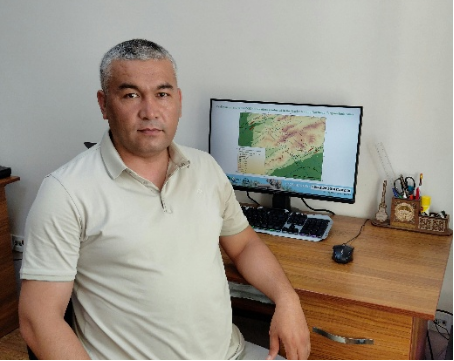 Zukhriddin ShukurovDr. Zukhriddin Shukurov is a Senior Researcher at the Laboratory of Modern Geodynamics, Institute of Seismology of the Academy of Sciences of the Republic of Uzbekistan. He holds a Doctor of Philosophy (PhD) degree in Geological and Mineralogical Sciences.His research focuses on geodynamics, seismotectonics, crustal deformation, GNSS/GPS geodesy, and seismic hazard assessment. He specializes in the processing and interpretation of GNSS data using modern geospatial technologies, including GAMIT-GLOBK, Bernese, and ArcGIS.Dr. Shukurov has participated in several national and international research projects related to active fault zones, geodynamic processes, seismic monitoring, and earthquake hazard assessment. He has also completed professional training and scientific internships in India, Kyrgyzstan, Russia, and China. He is the author and co-author of numerous scientific publications on geodynamics, GNSS applications, active tectonics, and seismic risk assessment, contributing to a better understanding of seismotectonic processes in Uzbekistan and Central Asia.
 -
3.3 Mechanisms Linking Natural Earthquakes to Oil-Gas Distribution and Their Exploration ApplicationsOrganizer:Liyan Zhang,Ang Li,Jinning Zhang
This session focuses on the mechanisms linking natural seismic activity to the distribution of oil and gas resources, as well as its potential applications in exploration. The conference will examine the coupling relationships between natural earthquakes and deep tectonic activity, fault systems, and hydrocarbon migration–accumulation processes, and analyze the spatial correlation patterns and dynamic origins between seismogenic zones and oil-gas field distribution. Additionally, the session will present advances in deep velocity structure inversion and structural/fault imaging techniques based on natural earthquake and microseismic monitoring data, including the use of microseismic monitoring networks, ambient noise tomography, and focal mechanism inversion to characterize fault geometry and fracture attributes in structurally complex areas, thereby supporting migration pathway analysis and reservoir prediction. The session will also assess the impacts of natural and induced seismicity on reservoir stability and injection–production operations, explore new approaches for earthquake–reservoir collaborative evaluation and risk mitigation, and promote the development of integrated prediction models for oil and gas using multi-source seismic data fusion. The goal is to achieve a comprehensive evaluation framework that spans structural identification to dynamic fluid monitoring, providing methodological innovation and technical support for deep to ultra-deep and unconventional oil and gas exploration and development.Session Convener Liyan ZhangProfessor, currently serves as a faculty member at the College of Petroleum, China University of Petroleum (Beijing) at Karamay, and as Deputy Director of the Academic Committee of the campus. She has been appointed Vice Chairperson of the Seismological Society of Xinjiang Uygur Autonomous Region and Director of the Karamay Monitoring Center Station, Earthquake Agency of Xinjiang Uygur Autonomous Region. She has long been engaged in teaching and scientific research in the field of geophysical exploration, with a primary focus on high-resolution seismic processing technologies for oil and gas exploration. She has received funding from the National Natural Science Foundation of China (Young Scientist Fund), the China Postdoctoral Science Foundation, the Autonomous Region's Innovative Leading Talent Program, the Autonomous Region's Outstanding Young Scientist Fund, and various petroleum industry projects. She has made significant achievements in areas such as seismic anisotropic velocity modeling. She has published over 60 journal papers and received two provincial/ministerial-level awards. She has authored two monographs and one textbook, filed six national invention patents (two granted), and registered four software copyrights.
 Ang LiAng Li, born in 1980, a member of the Communist Party of China, is a Professor-level Senior Engineer and Master’s Supervisor at China University of Petroleum (Beijing) at Karamay. He is recognized as an Innovative Leading Talent under the “Tianchi Talent” Program of the Xinjiang Uygur Autonomous Region, a High-Level Introduced Talent of Karamay City, a Distinguished Senior Expert at the Xinjiang Cloud Computing Engineering Technology Center, the Principal Investigator of a key research project of the Xinjiang Autonomous Region, and a Visiting Scholar at a Canadian university. His research primarily focuses on seismic interpretation and “sweet spot” prediction of unconventional oil and gas, seismic-geology-engineering integration, and intelligent geophysical exploration. He has led or participated in 20 national, provincial/ministerial, and oilfield company-level projects, and has received five provincial/ministerial-level awards. He has published over 30 journal papers, many of which have been indexed by SCI and EI, and is the author of two monographs. As the first inventor, he has been granted two national invention patents and four software copyrights.
 Jinning ZhangJinning Zhang, native of Fuxin, Liaoning Province; Member of the Communist Party of China; PhD, Associate Professor, Doctoral Supervisor, High-level Talent of Xinjiang Uygur Autonomous Region.He obtained his Bachelor’s, Master’s and Doctoral degrees from the Department of Geology, Northwest University. In 2016, he worked at PetroChina Dagang Oilfield Company. In 2017, he carried out postdoctoral research at the Postdoctoral Research Station of PetroChina Research Institute of Petroleum Exploration and Development. Since 2020, he has been serving China University of Petroleum - Beijing at Karamay. His research interests cover structural modeling of ultra-deep complex structural belts, structural analysis of petroliferous basins, integrated surface-subsurface geological modeling, integrated tectonic physical-numerical simulation experiments, coupling mechanisms of trap formation, hydrocarbon generation, reservoir development and hydrocarbon accumulation in sedimentary basins, as well as interdisciplinary research on digital geology and virtual reality.
 -
3.4 Gravity Field and Its Temporal Variations with Applications to Strong Earthquake PredictionOrganizer:Shi Chen, Minzhang Hu, Daiqin Liu, Tao Jiang ,Qian Zhao , Shuang Yi , Qiujie Chen , Wei Feng , Xiaoming Cui,Minkang Zhou, Guangyu Fu , Yiqing Zhu
The gravity field and its temporal variations reflect the internal structure of the Earth and deep-seated mass transport processes, playing a critical role in seismotectonic background studies and strong earthquake prediction. This session focuses on new technologies for gravity observation and data processing, inversion and interpretation of gravity anomalies in relation to seismotectonics, gravity changes and the mechanisms of strong earthquake preparation, as well as methods for strong earthquake prediction. We aim to facilitate in-depth exchanges on recent advances in theory, techniques, and methodologies. The session seeks to promote interdisciplinary integration among gravimetry, seismology, and geodesy, deepen the understanding of strong earthquake preparation mechanisms, advance the application of gravity-based technologies in operational earthquake forecasting, and enhance the scientific and technological support capacity for disaster prevention and mitigation.Session Convener Shi ChenProfessor (Grade II) and Deputy Director of the Institute of Geophysics, China Earthquake Administration (CEA), and Doctoral Supervisor. He serves as Deputy Director of the National Key Laboratory of Earthquake Dynamics and Strong Earthquake Prediction, and Director of the Beijing Key Laboratory of AI+ Application Key Technologies and Intelligent Equipment for Earthquake Prevention and Disaster Reduction. He is a member of the CEA Science and Technology Committee, a CEA Leading Talent, and the head of an innovation team. He was consecutively ranked among the Top 1% of Highly Cited Chinese Researchers in 2024 and 2025. He holds vice-chair positions in several committees of the Seismological Society of China and the Chinese Geophysical Society, and serves as Associate Editor of Acta Seismologica Sinica. He has published over 60 SCI-indexed papers and has led more than 10 national-level projects, including NSFC and National Key R&D Program projects. He has received the First Prize of CEA Scientific Achievement Award and the First Prize of Chinese Geophysical Society Scientific and Technological Award. Individually, he has been honored with the Liu Guangding Young Scientist Award for Geophysics and the Fu Chengyi Young Scientist Award.
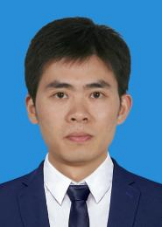 Minzhang HuProfessor (Research) and Deputy Director of the Wuhan Institute of Geodesy and Geophysics, China Earthquake Administration (CEA), and head of the CEA Technical Management Group for Gravity. He received his Ph.D. in Geodesy and Survey Engineering from Wuhan University in 2013. His research focuses on high-precision ground gravity observation technology and its application in earthquake monitoring and prediction, as well as gravity isostasy theory. In the past five years, he has led 15 projects including NSFC and National Key R&D Program projects, and published 37 papers (29 indexed in SCI/EI). He holds one invention patent (4th author), two software copyrights (1st author), and has co-authored one industry standard (2nd author). He has received five provincial/ministerial-level awards, including the Second Prize of CEA Scientific Achievement Award, the Second Prize and Special Prize of Natural Resources Science and Technology Progress Award, the Second Prize of Emergency Management Science and Technology Innovation Award, and the First Prize of Hubei Provincial Science and Technology Progress Award. He was selected as a CEA Backbone Talent (2020), a Hubei Provincial Young Top-Notch Talent (2021), received the CEA Individual Award for Earthquake Prevention and Disaster Reduction (2021), the Young Scientific and Technological Innovation Talent Award from the Chinese Society for Geodesy, Photogrammetry and Cartography (2022), a CEA Commendation for the Luding Earthquake Scientific Expedition (2023), and the Hubei Youth May Fourth Medal (2025), and was recognized as an Expert with Special Allowance of the Hubei Provincial Government (2025).
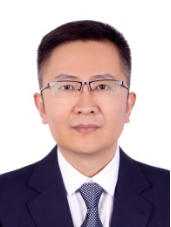 Daiqin LiuPh.D. in Science, Professor-level Senior Engineer, and Doctoral Supervisor. He is Director of the Geophysical Observation Center of the Earthquake Agency of Xinjiang Uygur Autonomous Region. He obtained his Ph.D. from the University of Science and Technology of China and was a visiting scholar at the University of Missouri, USA, in 2013. He has been selected for the Special Training Program for Western Talents, the Expert Talent Pool of Xinjiang, the Tianshan Outstanding Youth Talent Program, the CEA Backbone Talent Program, and the first batch of Xinjiang Youth Science Education Experts, and is a leading talent of the Earthquake Agency of Xinjiang. He currently serves as President of the Seismological Society of Xinjiang, Council Member of the Seismological Society of China, Deputy Director of the Science and Technology Committee of the Earthquake Agency of Xinjiang, and adjunct Doctoral Supervisor at Xinjiang University, as well as Master’s supervisor at China University of Geosciences (Beijing), the University of Emergency Management, and the Institute of Earthquake Research, CEA. In recent years, he has led or participated in more than 40 research projects and published over 100 academic papers. He has received nine provincial/ministerial-level science and technology progress awards and more than 10 bureau-level awards. In 2025, he was jointly awarded the title of “Advanced Worker of the National Seismic System” by the Ministry of Human Resources and Social Security and the China Earthquake Administration.
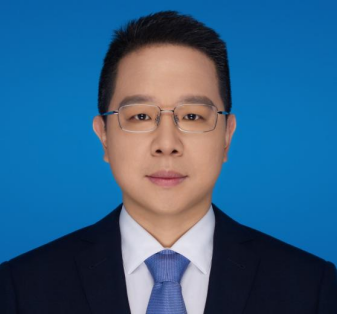 Tao JiangProfessor (Research) and Deputy Director of the Institute of Geodesy and Navigation, Chinese Academy of Surveying and Mapping. His research interests include Earth's gravity field and vertical datum, AI-based geodesy, and multi-source navigation and positioning. He is a recipient of the National High-Level Young Talent program and a Leading Scientific and Technological Innovation Talent of the Ministry of Natural Resources. He serves as Vice-Chair of Commission 2 (Gravity Field) of the International Association of Geodesy (IAG), Vice-Chair/Secretary-General of the IAG China Committee, and Vice-Chair of the Geodetic Working Group of the UN-GGIM-AP. He has led four NSFC projects, one sub-project of the National Key R&D Program, and more than 20 other research and technical service projects. He has participated as a task/technical lead in major national projects including the 2020 Mount Everest Height Measurement and the Global Geographic Information Resources Project. He has published over 50 papers in leading journals. He has received the Outstanding Communist Party Member Award from the Central Party and State Organs, the Top 10 Scientific Advances of China in 2020, two Special Prizes of the Natural Resources Science and Technology Award, the First Prize of the Surveying and Mapping Science and Technology Award, two “Frontrunner 5000 – Top Chinese Academic Papers” awards, and the Second Prize of the first China Youth Science and Technology Forum.
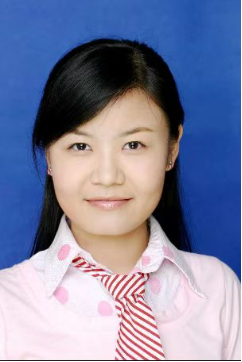 Qian ZhaoProfessor (Research) and Doctoral Supervisor at China University of Geosciences (Beijing). She is a recipient of the National Young Talent Program. Her research focuses on 3D crustal deformation monitoring, water storage changes, and geodynamic mechanisms. She has led more than 10 research projects, including NSFC and National Key R&D Program projects, and has published over 40 SCI papers in high-level journals. She has received the Second Prize of CEA Scientific Achievement Award, the Second Prize of Gansu Provincial Science and Technology Progress Award, and the Third Prize of the 13th Li Shanbang Outstanding Earthquake Science Paper Award. She was selected as a CEA Young Talent.
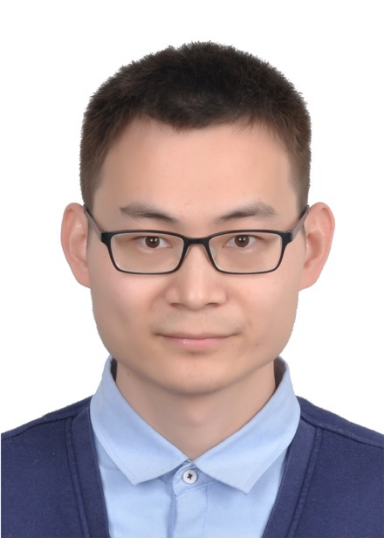 Shuang YiTenure-track Assistant Professor and Doctoral Supervisor at the University of Chinese Academy of Sciences (UCAS), and a recipient of the National Young Talent Program. She received postdoctoral fellowships from the Japan Society for the Promotion of Science (JSPS) at Hokkaido University (2016–2018) working with Prof. Kosuke Heki, and from the Alexander von Humboldt Foundation at the University of Stuttgart (2019–2020) working with Prof. Nico Sneeuw, where she also served as a research assistant in 2021. In 2022, she returned to UCAS with the first batch of NSFC Excellent Young Scientists Fund (Overseas). She currently leads projects including the NSFC Original Exploration Program (2026), NSFC General Program (2024), and a sub-project of the Deep Earth Major Program (2025). She has received the First Prize of Surveying and Mapping Science and Technology Award (2022, 3rd awardee), the UCAS Lingyan Gold Award (2023), and the Xiaomi Young Scholar Award (2025). Her research uses time-variable gravity satellite data to study global environmental changes induced by human activities and climate change. She has developed a novel gravity satellite data processing method that improves the temporal resolution from monthly to daily, enabling continuous monitoring of rapid extreme climate events such as floods and dam failures. She has published over 50 SCI papers and one monograph, with more than 4,000 citations.
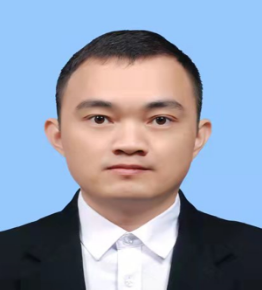 Qiujie ChenPh.D., Tenured Professor and Doctoral Supervisor at Tongji University. He is a recipient of the National Thousand Young Talents Program and an Alexander von Humboldt Fellow. He has long been devoted to theory, methods, and applications of satellite gravity inversion. His Tongji model series is the first Chinese model series included in the International Centre for Global Earth Models (ICGEM), with about 8,100 global downloads in the past five years, and has been adopted by the International Combination Service for Global Gravity Field Models (COST-G) in its service framework. He has authored one monograph and published 93 high-level papers in journals such as JGR, JOG, and GRL.
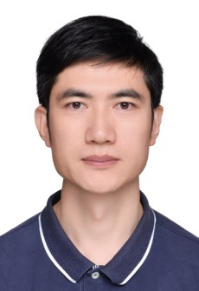 Wei FengProfessor and Doctoral Supervisor at the School of Remote Sensing Science and Technology, Sun Yat-sen University. He is a Fellow of the International Association of Geodesy (IAG) and the Chief Scientist of a National Key R&D Program project. His recent research focuses on satellite geodesy and global change. He has led more than 10 national-level projects, including the National Key R&D Program, NSFC International Cooperation and Exchange Program, NSFC General Program, and sub-projects of the National Major Science and Technology Infrastructure for Precision Gravity Measurement. He has published over 50 first/corresponding-author papers in journals such as WRR, JGR, GRL, JG, EPSL, Science China, and Chinese Journal of Geophysics. He currently chairs the IAG Sub commission on Gravity Inversion and Earth System Mass Transfer, serves as Deputy Secretary-General of the IAG China Committee, and is a member of the Geodesy and Navigation Committee of the Chinese Society for Geodesy, Photogrammetry and Cartography. He is also the Chinese lead for an international team at the International Space Science Institute (ISSI). He serves on the editorial boards of Chinese Journal of Geophysics, Pure and Applied Geophysics, and Geodesy and Geodynamics.
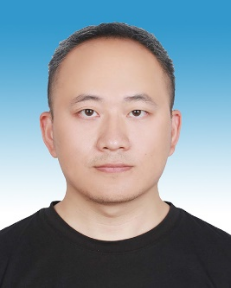 Xiaoming CuiAssociate Professor (Research) at the Innovation Academy for Precision Measurement Science and Technology, Chinese Academy of Sciences. He received his Ph.D. in Solid Geophysics from the University of Chinese Academy of Sciences (Institute of Geodesy and Geophysics) in 2013, where he was awarded the President’s Excellent Award. His research interests include Earth rotation variations, gravity and Earth tides, and core-mantle coupling. He has published more than 30 papers in journals such as J Geod, JGR, The Innovation, J Geodyn, EPS, PAAG, Geod & Geodyn, Science China, and Chinese Journal of Geophysics. He has led multiple research projects, including sub-projects of the National Deep Earth Science and Technology Major Program, the NSFC Major Program, NSFC General and Young Scientist Programs, and special projects of the State Key Laboratory of Geodesy and Earth’s Dynamics. In 2021, he was selected as one of the first Hubei Provincial Young Top-Notch Talents. He currently serves as Vice Chair of the IAG Sub commission 3.1 (Earth Tides and Geodynamics), a member of the 10th IAG China Committee, Vice Chair of the Gravity and Earth Tides Committee of the Chinese Geophysical Society, and an editorial board member of Geodesy and Geodynamics.
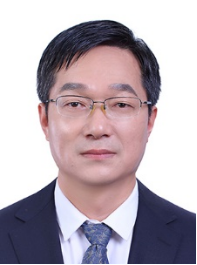 Guangyu FuProfessor and Doctoral Supervisor at China University of Geosciences (Beijing). He received his Ph.D. from the University of Tokyo with a scholarship from the Japanese Ministry of Education, and conducted postdoctoral research at Kyoto University supported by the Japan Society for the Promotion of Science. His research focuses on high-precision gravity observation, lithospheric isostasy, and earthquake geodesy. He has led more than 10 projects including the National Key R&D Program, the National Deep Earth Science and Technology Major Program, and NSFC projects. He has published over 100 scientific papers. He has received the Zhao Jiuzhang Outstanding Young and Middle-Aged Scientist Award, the Fu Chengyi Young Scientist Award, the Li Shanbang Outstanding Young Seismological Paper Award, the CEA Scientific Achievement Award, and the Chinese Geophysical Society Science and Technology Progress Award. He was selected into the first batch of the CEA “100 Excellent Talents for Earthquake Prevention and Disaster Reduction” and the CEA Backbone Talent Program. He currently serves as Associate Editor of Earthquake, and editorial board member of Earth, Planets and Space, Journal of Geodesy and Geodynamics, and Seismological and Geomagnetic Observation and Research.
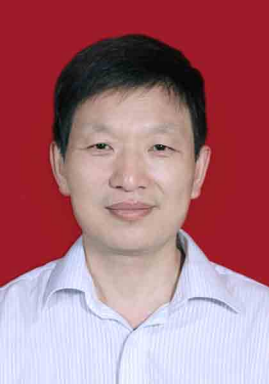 Yiqing ZhuProfessor (Grade II) at the Second Monitoring Center, China Earthquake Administration (CEA). He is a recipient of the Special Government Allowance of the State Council, a National Advanced Individual in Field Science and Technology Work, and an Advanced Worker of the National Seismic System. He holds certifications as a Level 1 Seismic Safety Evaluation Engineer and a Registered Surveyor. His research is devoted to gravity measurement and data processing, and the theory and application of gravity temporal variations in relation to strong earthquakes. He has led four NSFC General Projects and participated in more than 20 scientific projects, including national key research projects, National Key R&D Program projects, NSFC Major Program projects, and special earthquake industry projects. He has received nine provincial/ministerial level science and technology progress awards, including one first, one second, and one third prize as the first awardee. He has published more than 220 papers in domestic and international academic journals, with over 70 indexed in SCI/EI. He was ranked among the Top 1% of Highly Cited Scholars in 2024–2025 by CNKI.
 -
4.1 New Generation Seismic Zoning Map and Collaborative Seismic Risk Mitigation in Central AsiaOrganizer:Guangyin Xu, Jian Wu, Weihua Hu, Changlong Li
This session aims to support the national "Belt and Road" Earthquake Safety Initiative, with a focus on discussing the scientific basis, technical methods, and application outcomes of China's sixth-generation ground motion parameter zoning map, providing an advanced paradigm for transnational seismic risk mitigation. At the same time, the session will facilitate exchanges on the current status, challenges, and practices in historical earthquakes and seismotectonics, seismic zoning, and seismic hazard assessment in Central Asian countries, and explore key technologies for the collaborative construction of cross-border seismotectonic models and seismic hazard analysis. The session will delve into how cutting-edge achievements in seismic zoning can be applied to urban planning and the seismic fortification of major engineering structures, and will strive to promote the establishment of a data sharing and cooperation mechanism for seismic zoning under the "Digital Silk Road", thereby providing scientific and technological support for achieving seamless integration and collaborative development in seismic risk mitigation between China and Central Asian countries.Session Convener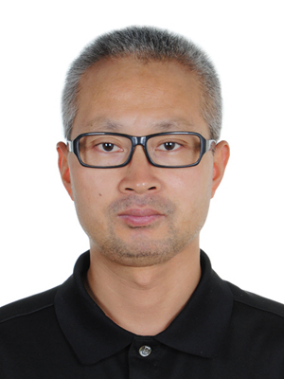 Guangyin XuMale, born in 1971, Ph.D. He is currently a Professor at the Institute of Geophysics, China Earthquake Administration (CEA), Head of the Seismic Zonation Key Technology Group, and Chair of the Committee on Historical Seismology of the Seismological Society of China. His research focuses on seismic activity analysis, seismic hazard analysis, seismic zonation methods, regional and national seismic zoning mapping, and engineering seismology. As principal investigator, he has led and completed eight national-level projects or sub projects, as well as multiple projects under the Joint Seismological Science Foundation and the CEA Director’s Fund. He has received the First Prize and Third Prize for Outstanding Achievements in Earthquake Prevention and Disaster Reduction (CEA), as well as the Third Prize for Scientific and Technological Progress from the China Association for Disaster Prevention.
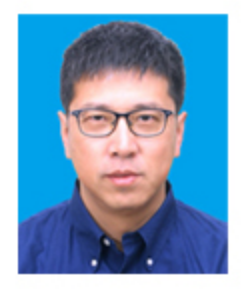 Jian WuPh.D. in Science, Deputy Director of the China Earthquake Disaster Prevention Center. He is a member of the 14th National Committee of the Chinese People’s Political Consultative Conference (CPPCC) and a member of the Jiusan Society. His work focuses on national seismic zonation, probabilistic seismic hazard analysis, determination of ground motion parameters for major engineering sites, and earthquake disaster risk assessment, as well as the development of corresponding operational systems. He currently serves as the Lead Expert for the Earthquake Hazard Component of the First National Natural Disaster Comprehensive Risk Survey, Chief Editor of the Sixth Generation National Seismic Zonation Map, Coordinator of the Technical Coordination Group for Earthquake Disaster Risk Prevention, and Chair of the Local Working Committee of the Seismological Society of China. He was previously a member of the Expert Group for the 13th Five-Year Plan on Scientific and Technological Innovation for Disaster Prevention and Mitigation of the Ministry of Science and Technology. He has received one Second Prize for Scientific and Technological Achievements in Earthquake Prevention and Disaster Reduction from the CEA.
 Weihua HuHe graduated from Chengdu University of Technology in July 1993 with a Bachelor’s degree in Hydrogeology and Engineering Geology. Since December 2012, he has been serving as Director of the Earthquake Disaster Risk Prevention Center (also Director of the Institute for Natural Disaster Prevention), with the title of Professor level Senior Engineer. He has participated in more than 50 post earthquake field investigations and has led detailed surveys of 45 active faults in Xinjiang. He has directed the active fault detection projects in five cities of Xinjiang, served as principal investigator for over 20 seismic safety evaluations and micro zonation studies for major engineering projects (including the China–Kyrgyzstan–Uzbekistan Railway in Kyrgyzstan), and participated in more than 50 such projects. He has also led the earthquake disaster risk survey of Xinjiang and the large earthquake source exploration project — deep seismic reflection profiling in the southeastern Tianshan detection zone.
 Changlong LiAssociate Professor (Ph.D.) at the Institute of Geophysics, China Earthquake Administration (CEA). He serves as a Board Member of the Risk Analysis Professional Committee of the China Association for Disaster Prevention, a Member of the Earthquake Disaster Risk and Seismological Sociology Committee of the Seismological Society of China, a Youth Editorial Board Member of Progress in Earthquake Sciences, a main contributor to the GEM Global Seismic Hazard and Risk Map (2018) for China, a member of the first batch of CEA cadres supporting Xinjiang, a member of the mapping team for the Sixth Generation Seismic Ground Motion Parameter Zonation Map of China, and the lead for the marine seismic zonation thematic area. His research focuses on seismic hazard and risk analysis, and seismic zonation. He is the first awardee of a Third Prize for Science and Technology Progress in Disaster Prevention (China Association for Disaster Prevention) and the first awardee of the 40th Anniversary Academic Achievement Award of the Seismological Society of China.
 -
4.2 Earthquake Disaster Risk Assessment and ResponseOrganizer:Xuchuan Lin,Benyong Wei, Wenhua Qi, Ping Wang,Qian Wang ,Heping Wen
Earthquake disaster risk assessment serves as the core link in reducing disaster losses and enhancing response capabilities, as well as a key pillar for implementing new concepts of disaster risk management. The significant disparities in China’s natural geographical environment and socio-economic development have led to considerable heterogeneity in the dominant factors and formation mechanisms of regional earthquake disaster risks. This session focuses on innovations in earthquake risk assessment methodologies, incorporating regional differential analysis to diagnose the formation mechanisms of regional earthquake disaster risks, examine practical experiences in earthquake response across different regions, uncover the intrinsic connections between "risk identification, prevention and mitigation, and emergency management," and summarize replicable regional earthquake disaster response models. We welcome the latest study findings in areas such as technological innovations in earthquake risk assessment, analysis of risk formation mechanisms, regional risk response strategies, and technology-enabled disaster risk reduction.Session Convener Xuchuan LinDr. Xuchuan Lin is a professor from Institute of Engineering Mechanics (IEM), China Earthquake Administration, serving as director of the Urban Comprehensive Disaster Prevention Research Center. He is the recipient of State Council Special Government Allowance. Before IEM, he worked as postdoctoral researcher at the Earthquake Research Institute, University of Tokyo (2013-2014) and Disaster Prevention Research Institute, Kyoto University (2012-2013). He earned his Ph.D. in Architecture and Architectural Engineering from Kyoto University in 2012, and received Bachelor’s and Master’s degrees in Civil Engineering from Tsinghua University in 2007 and 2009, respectively. His research expertise lies in urban earthquake disaster simulation and structural engineering. He has published over 130 journal papers and two academic monographs, ranked among the Top 1% of Highly Cited Scholars on CNKI. He has been a co-recipient of one First Prize of the National Science and Technology Progress Award and three provincial/ministerial-level First Prizes. He has developed the Urban Earthquake Disaster Simulator, which has been deployed by over 30 organizations worldwide for urban disaster prevention planning, catastrophe insurance, and earthquake emergency response. He has participated in over ten post-earthquake emergency response, scientific investigation, and search-and-rescue missions. Serving as the structural engineer for China Search and Rescue Team, he participated in the on-site search and rescue operations during the 2023 Mw 7.8 earthquake in Turkey and the 2025 Mw 7.9 earthquake in Myanmar.
 Benyong WeiBenyong Wei, Ph.D., is a Professor and Doctoral Supervisor at the Institute of Geology, China Earthquake Administration (CEA). He currently serves as the Director of the Science and Technology Development Division. His study focuses on disaster mechanisms and risk analysis. He has led over more than ten national and provincial-level projects, including those funded by the National Natural Science Foundation of China and sub-topics under the National Key R&D Program. He has published more than 60 publications, including over 30 indexed by SCI/EI. His accolades include two Second Prizes for Scientific and Technological Progress (Provincial/Ministerial Level), one Commendation Award from the CEA, and one Outstanding Achievement Award in Earthquake Disaster Mitigation. He also serves on the editorial boards of journals such as Scientific Reports and Progress in Earthquake Sciences.
 Wenhua QiQI Wenhua is an associate professor of seismic disaster risk reduction based in the Institute of Geology, China Earthquake Administration. He is the member of the professional committee on earthquake disaster risk & seismological sociology and the member of the professional committee on earthquake emergency, Seismological Society of China.His current research interests mainly focus on multi-sensing and disaster reduction, cascading effects of earthquake disasters, social disaster-related behaviors, and earthquake science popularization.
 Ping WangDr. Wang Ping is a Professor-level Senior Engineer and Master’s Supervisor. He serves as a council member of several Gansu provincial societies related to rock mechanics, mechanics, and seismology, a corresponding member of ISSMGE, and a committee member of the Seismological Society of China. His research focuses on soil dynamics and seismic hazard mitigation of special soils in arid regions, including scenario-based geotechnical earthquake disaster assessment, loess landslide hazard evaluation, and seismic subsidence treatment for loess foundations.
 Qian WangHe received his Ph.D. in Engineering from Lanzhou University in 2019. He is currently a Professor (researcher) and Deputy Director of the Lanzhou Institute of Geotechnical Earthquake Engineering, China Earthquake Administration (CEA), and has been a Master’s supervisor since 2018. His research focuses on soil dynamics, geotechnical earthquake engineering, and geotechnical disaster prevention and mitigation, including scientific research, outreach, and consulting. He serves as a Corresponding Member of the International Society for Soil Mechanics and Geotechnical Engineering (ISSMGE), a committee member of the Chinese Society for Rock Mechanics and Engineering and the Seismological Society of China, a Youth Editorial Board Member of the Journal of Earthquake Engineering, and a reviewer for journals including Engineering Geology and the Chinese Journal of Rock Mechanics and Engineering. He has published more than 140 academic papers, co authored one academic monograph, holds over 40 authorized national invention patents, and has received 18 provincial/ministerial level awards including the Gansu Provincial Science and Technology Progress Award. He has been selected for five provincial/ministerial talent programs, including the Gansu Provincial Leading Talent and CEA Backbone Talent programs.
 Heping WenMale, born in 1970. He holds a Master’s degree in Engineering and is an Associate Researcher. He is Deputy Director of the Institute of Natural Disaster Prevention of Xinjiang, mainly engaged in earthquake disaster risk analysis. He currently serves as a member of the Council of the Seismological Society of Xinjiang and the Geological Society of Xinjiang, and as a member of the Science and Technology Committee of the Earthquake Agency of the Xinjiang Uygur Autonomous Region.4.3 Strong Ground Motion and Seismic Hazard AnalysisOrganizer:Yefei Ren, Zhenguo Zhang, Su Chen, Duofa Ji, Xiaoliang Zhang, Hongwei Wang
Strong ground motion and seismic hazard analysis are one of core research topics in earthquake engineering field, related to the seismic design of major engineering projects, earthquake disaster risk assessment, and the resilient city development. With the continuous accumulation of strong-motion observation data, ongoing innovations in seismic hazard analysis methods, and the rapid advancement of high-performance computing and artificial intelligence technologies, this field is undergoing profound transformations at the data, methodological, and application levels. This session aims to bring together researchers and engineers from seismology, earthquake engineering, and engineering seismology to engage in in-depth exchanges on the latest advances in strong ground motion and seismic hazard analysis. The session focuses on, but is not limited to, the following topics: strong-motion observation techniques and applications, typical characteristics of strong ground motion, ground motion prediction models, ground motion simulation techniques and applications, local site effects, seismic hazard analysis methods and applications, seismic zonation, and applications of novel technologies such as artificial intelligence. We cordially invite experts and scholars in related fields to share their cutting-edge research findings and practical experience, jointly advancing research on strong ground motion and seismic hazard.Session Convener Yefei RenYefei Ren is a professor and doctoral supervisor at the Institute of Engineering Mechanics, China Earthquake Administration, and currently serves as the Director of the Engineering Seismology Research Center. His research focuses primarily on seismic zoning, site effects on ground motion, and earthquake-induced tsunami hazard analysis. He has been selected for the “Key Talent” Program of the China Earthquake Administration and is a recipient of the Outstanding Youth Science Foundation of Heilongjiang Province. He has led approximately 20 scientific research projects, including a China–U.S. intergovernmental collaborative project and multiple projects funded by the National Natural Science Foundation of China. He has published over 200 academic papers and contributed to the compilation of 15 national and industrial seismic codes. He serves as an Associate Editor for the journal Discover Applied Sciences and as an editorial board member for several other journals. He has also repeatedly served as a session convener and chair at major international conferences, including the World Conference on Earthquake Engineering (WCEE) and the Annual Meeting of the Seismological Society of America (SSA).
 Zhenguo ZhangZhenguo Zhang is a tenured Associate Professor at Southern University of Science and Technology (SUSTech). He has long been dedicated to seismology research, with interests spanning seismic source physics and dynamics, rapid response to earthquake disasters, and high-performance computing in seismology. He has led multiple research projects, including those supported by the NSFC Excellent Young Scientist Program and the National Key Research and Development Program of the Ministry of Science and Technology of China. He has published over 90 academic papers. In 2017, he received the ACM Gordon Bell Prize, the highest honor in high-performance computing applications. The award-winning work achieved, for the first time on a China-developed supercomputer, ultra-large-scale seismic numerical simulations — marking a successful application of high-performance seismic simulation on a China-developed platform and fully demonstrating the powerful capabilities of the Sunway TaihuLight supercomputer. In 2018, he received the Fu Chengyi Young Scientist Award from the Chinese Geophysical Society. Dr. Zhang currently serves on the editorial board of the journal Earthquake Science and is a member of the 10th Youth Committee for Scientific and Technological Work and the 9th Committee on Historical Seismology of the Seismological Society of China. He also serves as a reviewer for several leading domestic and international journals.
 Su ChenSu Chen is a professor at Beijing University of Technology, and is a special-appointed expert at the Institute of Geophysics, China Earthquake Administration. He has led several national-level scientific research projects including major projects funded by the National Natural Science Foundation of China and key research projects of the National Key Research and Development Program. He has provided earthquake technology services for numerous major infrastructure projects in China. His research focuses on determining seismic motions for engineering design, as well as the intersection of scientific artificial intelligence (AI4S), and has published over 100 academic papers and obtained more than 20 invention patents. He has won 5 provincial-level science and technology progress awards from the Ministry of Education and the Ministry of Emergency Management, 3 provincial-level science and technology awards from the Ministry of Education and the Ministry of National Defense, and personal awards such as the Youth Science Award of the China Disaster Prevention Association and the Li Shanbang Award of the China Earthquake Society.
 Duofa JiJDuofa Ji is a professor and doctoral supervisor at Harbin Institute of Technology, with a strong focus on research related to strong ground motion characteristics and simulation. His research interests include intelligent simulation of regional ground motion fields, intelligent selection of strong ground motion characteristics, and probabilistic seismic safety evaluation of nuclear power plants. He has led more than 20 projects, including National Natural Science Foundation of China (NSFC) Youth Program (Class B), NSFC General Program, Youth Program (Class C), sub-projects of major programs, sub-projects of key programs, sub-projects of the National Key Research and Development Program, Heilongjiang Provincial Excellent Youth Program, China Postdoctoral Science Foundation-Special Grant, and China Postdoctoral Science Foundation - General Program. As a key member, he has participated in NSFC Distinguished Youth Program and NSFC Excellent Youth Program. He serves as a member of the Seismic Resistance Professional Committee of the China Association for Engineering Construction Standardization, an editorial board member of the international journals Scientific Reports and Engineering and Applied Sciences, and a young editorial board member of Earthquake Engineering and Resilience. He has published more than 50 SCI papers and holds more than 20 national invention patents. As the main drafter, he has completed China's first standard on urban seismic resilience evaluation, Guidelines for Seismic Resilience Evaluation of Urban Engineering Systems (RISN-TG041-2022), and developed the first software platform. He has also participated in the compilation of the Heilongjiang Provincial Code for Seismic Behavior Design of Building Engineering (DB23/T1502-2023). His achievements have been applied to seismic hazard analysis in more than ten provincial and municipal standards, seismic resilience evaluations of Shanghai and other cities, and more than ten important projects such as the Hainan Changjiang Multi-purpose Modular Small Reactor Technology Demonstration Project. He has received two provincial and ministerial first-class awards and numerous scientific and technological awards, including the first "Xiaomi Young Scholar" award at Harbin Institute of Technology.
 Xiaoliang ZhangXiaoliang Zhang is a Professor level Senior Engineer at the China Earthquake Disaster Prevention Center, China Earthquake Administration. His research focuses on seismic zonation, including GNSS based multi disciplinary seismic hazard analysis and the determination of scenario ground motion response spectra. He has led five research projects, including a special project of the National Key R&D Program, and served as a key technical member in 15 additional projects such as earthquake industry special funds. He has published 16 journal papers, contributed to five national or industrial standards, and co authored one monograph. As a principal contributor, he has received two second class awards for scientific and technological achievements in earthquake prevention and disaster reduction from the China Earthquake Administration (CEA). As a team leader, he won the CEA Innovation Award for Earthquake Prevention and Disaster Reduction, and has been named a CEA “Young Talent”. He currently serves as a member of the Compilation Committee for the Sixth National Seismic Ground Motion Parameters Zonation Map and a member of the Seismic AI Committee of the Seismological Society of China.
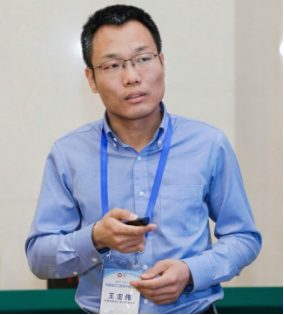 Hongwei WangHongwei Wang is an Associate Researcher and Master’s Supervisor at the Institute of Engineering Mechanics, China Earthquake Administration. He is mainly engaged in research on ground motion prediction, simulation, and engineering applications. He has led 10 scientific research projects, including two funded by the National Natural Science Foundation of China, and has participated as a key member in three National Key R&D Program projects and two National Key R&D Program international cooperation projects. He was also a member of the compilation group for China’s sixth-generation seismic ground motion parameter zonation map. He has published 95 academic papers and co-authored three monographs (including translated volumes). As a major contributor, he has received one First Prize of Scientific Research Achievements in Earthquake Prevention and Disaster Reduction from the China Earthquake Administration, one Third Prize of the Disaster Prevention Science and Technology Award. In 2021, He received the Li Shanbang Youth Outstanding Earthquake Science and Technology Paper Award. He serves as a committee member of the Seismology Committee of the Seismological Society of China and as a youth editorial board member of the Journal of Disaster Prevention and Mitigation Engineering, among other academic roles.4.4 Roundtable on Earthquake Disaster Prevention and Reduction Science Popularization and Enhancement of Public Emergency Response CapabilityOrganizer: Lijun Song, Kai Zhang, Ming Tan, Yafang Li
This roundtable will explore how to leverage China's mature science popularization resource library, new media communication platforms, and experience in building science education bases, while taking into account the national conditions, cultural characteristics, and public cognitive habits of Central Asian countries, to develop adaptable and implementable cross-border models for science popularization cooperation. Discussions will focus on: how to promote cross-border sharing and localized adaptation of science popularization products for earthquake disaster prevention and reduction, innovate forms of science communication by drawing on effective practices such as integrating folk culture and arts with science popularization and empowering it through technology, and produce high-quality science products that are both scientifically sound and engaging while meeting local public needs; how to strengthen the exchange and training of science popularization personnel between both sides, establish long-term and stable cooperation mechanisms, and enhance the professional capacity of science popularization workers in Central Asian countries; and how to promote interconnectivity of earthquake early warning information dissemination channels, popularize core knowledge on earthquake early warning, proper response during earthquakes, and post‑earthquake self‑rescue and mutual aid, standardize emergency evacuation drill procedures, and effectively improve the public awareness of earthquake disaster prevention and reduction as well as practical emergency response capabilities in Central Asia.
At the same time, the roundtable aims to systematize China's mature experience and innovative achievements in science popularization for earthquake disaster prevention and reduction, promote deep collaboration between China's Xinjiang and Central Asian countries in this field, break down regional barriers, share science popularization resources, address the shortcomings in public emergency response capability in Central Asia, build a strong people‑based line of defense for cross‑border earthquake disaster prevention and reduction, contribute science popularization efforts to regional earthquake disaster control, and help establish a regional community for earthquake disaster prevention and reduction.Session Convener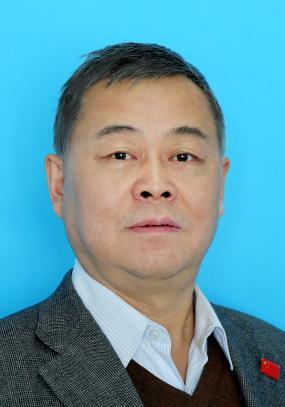 Lijun SongSong Lijun, former Second-Class Inspector and Associate Researcher of Xinjiang Uygur Autonomous Region Seismological Bureau, is currently Deputy Director of the Emergency Professional Committee of China Earthquake Society, etc. He is a National First-Class Seismic Safety Evaluation Engineer and Senior Disaster Assessment Engineer of China Earthquake Administration, long engaged in seismic disaster prevention, emergency rescue technology and management. He has participated in on-site emergency rescue work for more than 50 times in earthquakes inside and outside the region, published more than 40 academic papers, participated in the compilation of several monographs, won many scientific and technological achievement awards, and took part in revising 17 national standards and industry specifications.
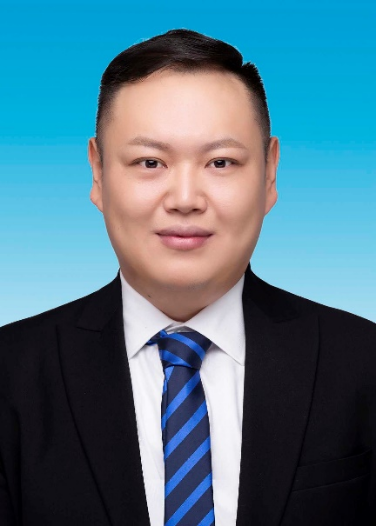 Kai ZhangKai Zhang, currently Deputy Director of the Public Service Department (Department of Laws and Regulations) of the Earthquake Agency of Xinjiang Uygur Autonomous Region, and a member of the Special Task Force for the Transformation and Upgrading of Earthquake Disaster Prevention and Mitigation Science Popularization under the China Earthquake Administration (CEA). He has participated in emergency responses to several major earthquakes, including the Ludian M6.5 earthquake in Yunnan, the Taxkorgan M5.5 earthquake in Xinjiang, and the Wushi M7.1 earthquake in Xinjiang, and possesses extensive experience in earthquake emergency public communication. He served as the lead drafter for several important institutional documents, including the Public Earthquake Safety Capability Building Framework, and has contributed to the publication of five earthquake science popularization metaverse book series, including The History of Earth. He has also made multiple appearances on science popularization programs produced by the China Earthquake Administration. He has long provided guidance to prefectures, cities, and relevant industry authorities on conducting earthquake emergency drills, and has rich practical experience in earthquake disaster prevention and mitigation science popularization as well as skills training.
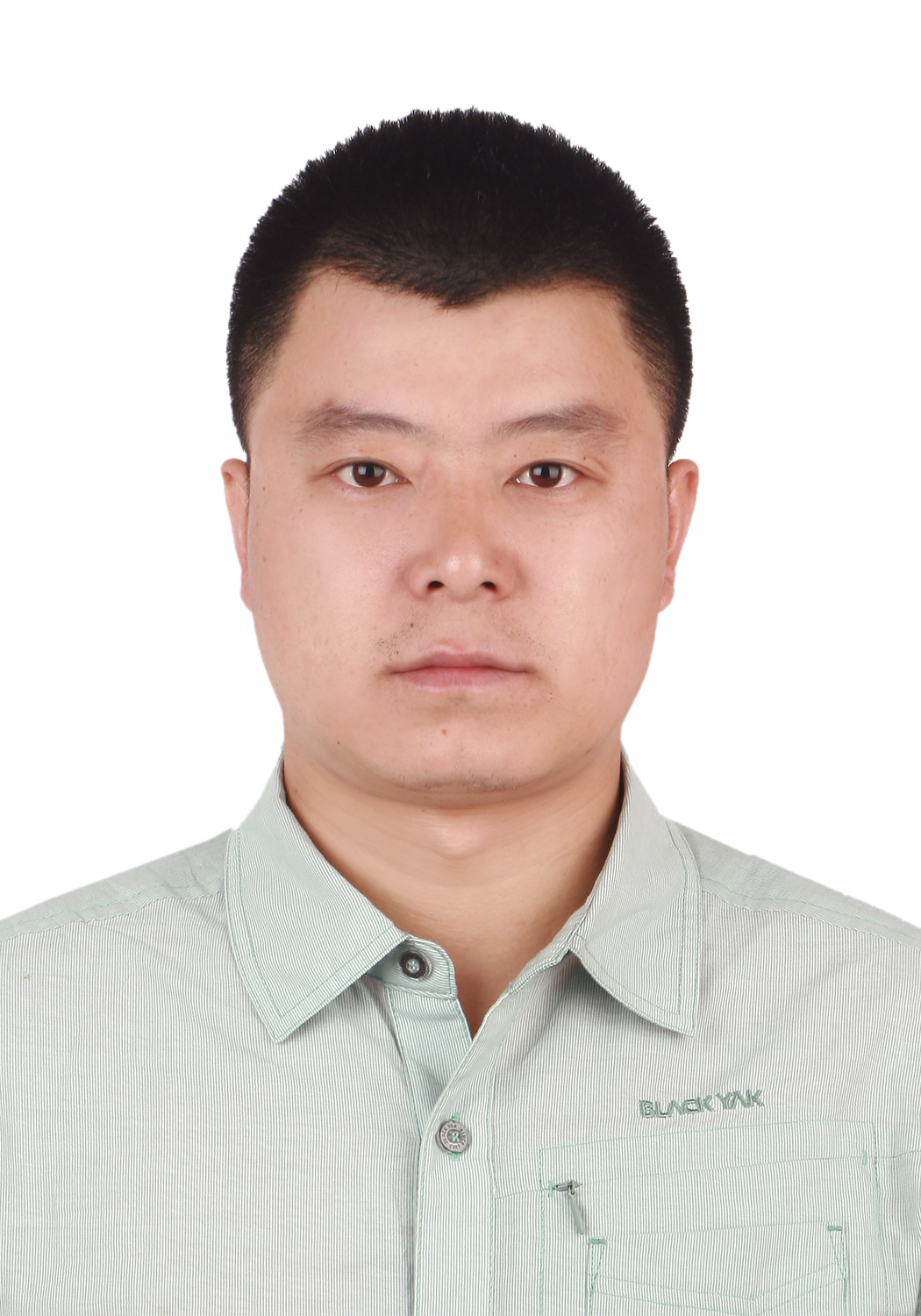 Ming TanMing Tan ,is a Senior Engineer and Director of the Emergency Service Center of Xinjiang Uygur Autonomous Region Seismological Bureau. Graduated from Xinjiang University in 2004, he has long engaged in earthquake engineering technology research, participated in over 50 major project seismic safety evaluations and nearly 40 major destructive earthquake on-site works inside and outside Xinjiang. He undertook 7 scientific research projects (e.g., "Study on Seismic Damage Matrix of Seismic-Safe Housing in Xinjiang") and participated in 11 others. He has published 5 academic papers and won 5 awards for earthquake prevention and disaster reduction achievements.
 Yafang LiYafang Li, Deputy Director and Senior Engineer of the Earthquake Emergency Service Center of Xinjiang Earthquake Administration, and Member of the Emergency Professional Committee of the Seismological Society of China. She has long been engaged in earthquake emergency science popularization and publicity, creation of popular science works, planning of popular science activities, as well as theoretical and practical research on science popularization. Her popular science achievements have won numerous awards. She was conferred the 7th Xinjiang Science Popularization Award and honored as an Advanced Individual in Earthquake Disaster Prevention and Mitigation by China Earthquake Administration.
Section 1. The tectonic background and dynamic process of earthquake incubation.
Section 2: Theoretical, methodological, and cutting-edge new technologies for earthquake prediction.
Section 3: Seismic Physical Processes and Intelligent Monitoring Technology.
Section 4: Earthquake Engineering and Resilience Disaster Prevention.